
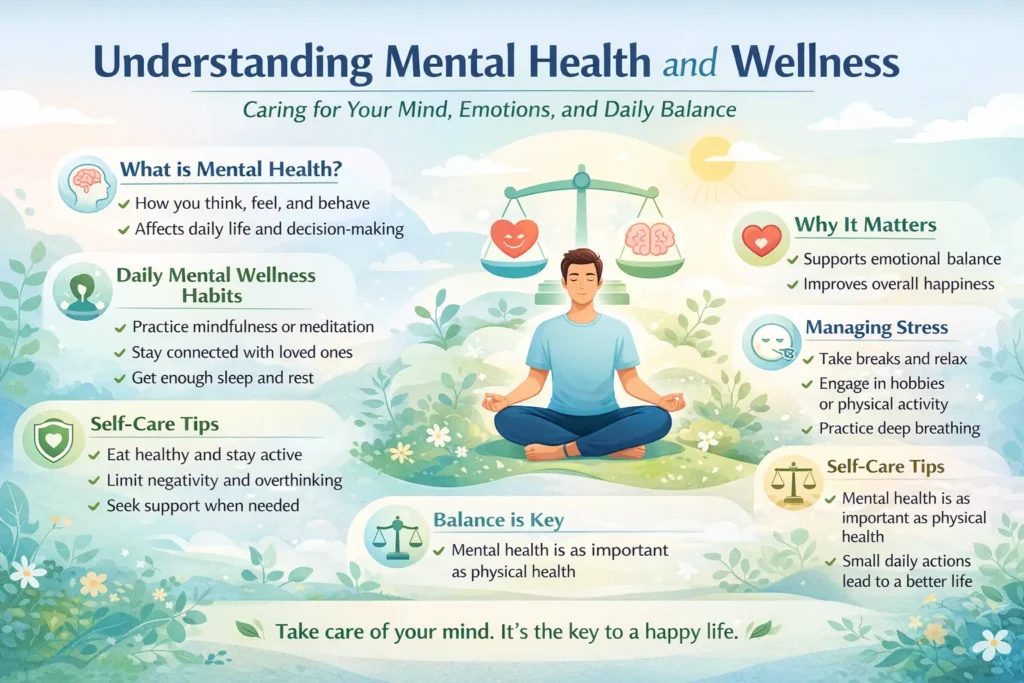
Taking care of your mind and emotions helps you thrive. This includes how you think, feel, and handle daily stress. Nurturing your mental health leads to a happier, more balanced life. Remember, it matters just as much as your physical health.
This guide will help you learn simple, practical ways to support your mental health and well-being every day.
Stress and Anxiety Management Techniques
Managing stress helps you feel your best. Use simple steps, such as deep breathing or relaxation techniques. These techniques help you stay calm, reduce anxiety, and boost your sense of well-being.
Mindfulness and Meditation Practices
Mindfulness helps you stay present in the moment, while meditation relaxes your mind and eases stress. Practising them daily can improve your focus and bring more peace into your life. In addition, good sleep helps your brain rest and recover, while poor sleep can increase stress and anxiety. Getting regular sleep can improve your mood and thinking.
Common Mental Health Challenges
Many people overcome mental health challenges like stress, anxiety, and depression. Even with a busy life, you can take steps toward wellbeing. Reaching out for support makes things better. Understanding yourself is the first step to positive change.
Strategies for Improving Mental Health
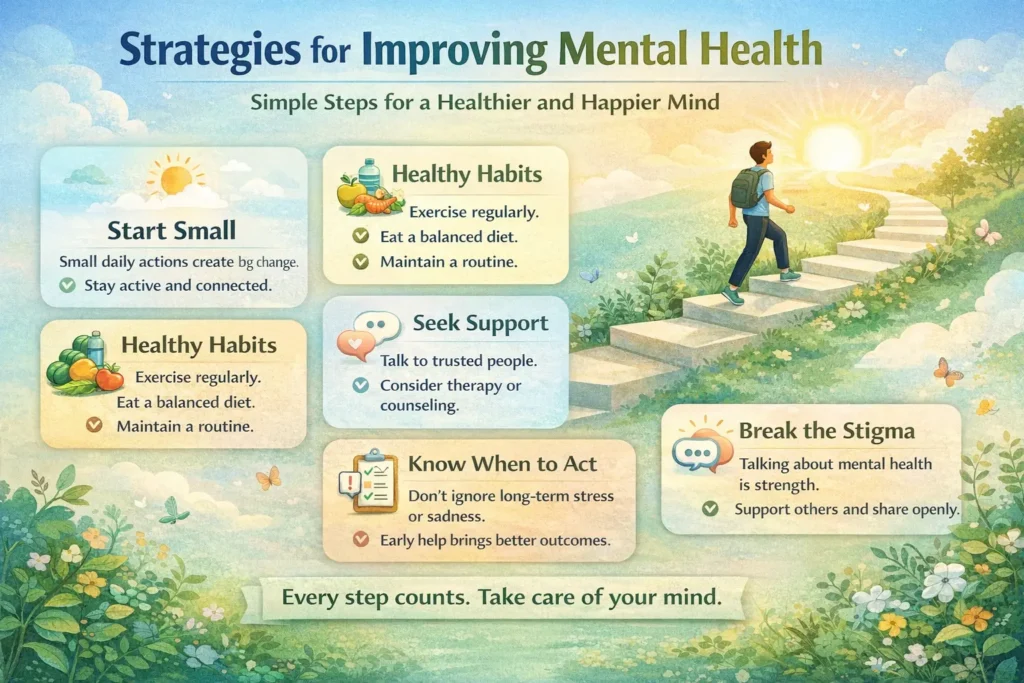
Improving your mental health is a rewarding journey. Small actions, like exercising or connecting with others, uplift you. Staying positive and active helps build resilience, and every small step can lead to meaningful progress.
Daily Healthy Habits
Regular exercise and a good diet help your mind flourish. Healthy habits energise you and provide stability. Building good routines makes every day stronger and more fulfilling.
Positive Thinking
Thinking positively helps reduce stress. It boosts your mood and confidence. Another helpful habit is time management, which lowers pressure and helps you stay organized and calm. Sometimes, habits are not enough. Therapy and counselling can help people understand their emotions. Experts guide you in handling stress and problems, providing a safe space to talk. This support improves mental health over time. Professional help, such as therapy, offers expert advice and guidance. Therapists help you understand your thoughts, leading to better solutions.
When to Seek Help
If stress or sadness continues, reaching out is a sign of strength. Early support brings relief and helps you regain balance. Listen to your needs—taking care leads to brighter days.
Breaking Mental Health Stigma
Many people may feel shy about asking for help, but seeking support is a positive and brave step. Talking about mental health makes us stronger and brings us closer to others.
Building Resilience and Emotional Well-being
Resilience means staying strong during tough times. Emotional well-being helps you manage your feelings more effectively. Together, they improve your life balance. They help you face challenges with confidence. To build resilience, rely on family and friends for emotional support. Community groups also help people feel connected. Support systems reduce stress.
Coping with Depression and Emotional Struggles
Reaching out to someone uplifts your spirits. Healthy routines support your mood, and caring connections play a meaningful part in your wellbeing.
Sometimes, words heal what medicine cannot. Read our English Healing Poetry on Pain and Finding Light for soul comfort.
Self-Care Practices
Self-care means celebrating yourself. Enjoy time for rest and hobbies—they recharge you and support your emotional health.
Signs of Good Mental Health
Good mental health shines through feeling calm, balanced, and strong in the face of stress. You can make confident decisions, feel positive, and connect with others. This is the foundation of a healthy, happy mind.
Poor mental health
Poor mental health can affect your daily life and relationships. You might feel stressed, sad, and low on energy, which may even harm your physical health. Taking early care is very important. To prevent poor mental health, exercise helps by reducing stress. It releases feel-good hormones. Regular activity keeps the mind fresh. It also improves sleep and mood. Along with exercise, good relationships improve mental health. Talking to others reduces stress and loneliness. Social support builds confidence. It helps you feel happy and secure.
Healthy Lifestyle for Mental Wellness
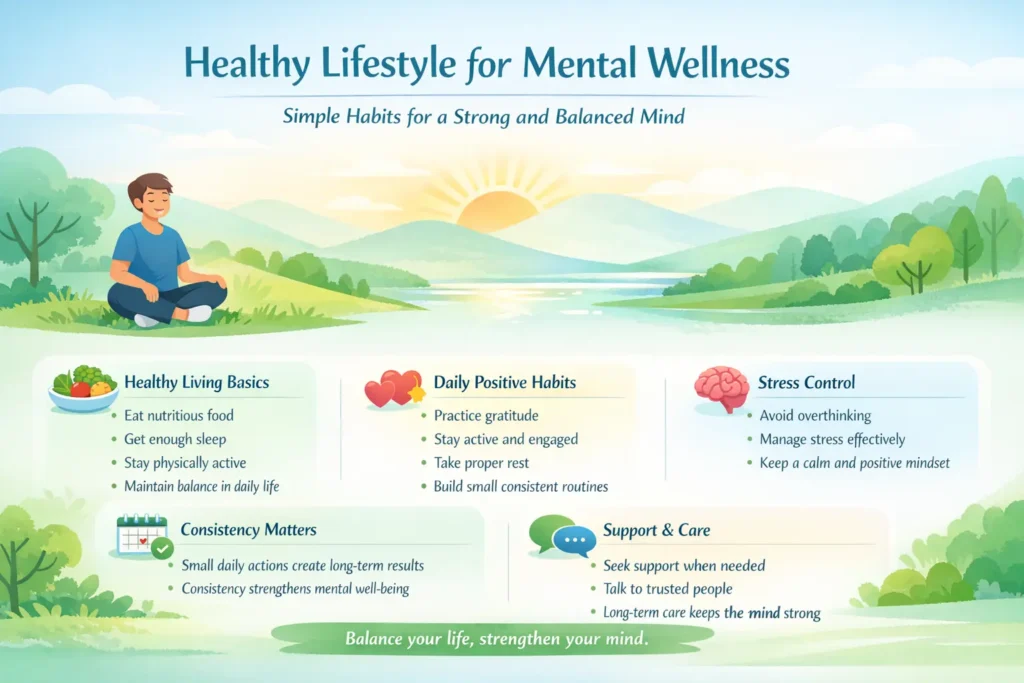
A healthy lifestyle supports a strong mind. Eating well, sleeping enough, and staying active go a long way. Avoid unhealthy habits. Balance is the key to mental well-being. To make these routines work, small daily habits can improve mental health. Practice gratitude, stay active, and rest well. Avoid overthinking and stress. Consistency brings better results. Maintaining these healthy routines strengthens mental well-being. Seek support when needed. Long-term care keeps your mind strong and balanced.
FAQs
Can Daily Habits Improve Long-Term Mental Wellness?
Yes. Simple daily habits like exercise, good sleep, and healthy eating can improve mental wellness. These habits keep your mind calm and balanced. Over time, they help build a strong and healthy mindset.
Is Consistency Important for Mental Wellness?
Yes. Being consistent with healthy habits is very important. Small actions done daily give long-term results. Regular routines help your mind stay stable and strong.
Can Social Support Improve Mental Health Over Time?
Yes. Talking to family and friends helps reduce stress. Support from others makes you feel safe and understood. Strong relationships improve long-term mental wellness.
Does Mental Wellness Improve in One Day?
No. Mental wellness takes time and effort. It cannot improve in just one day. You need patience and regular care for long-term results.
Should You Ignore Stress for Better Mental Health?
No. Ignoring stress is not good. It can make problems worse over time. It is better to manage stress with healthy methods, such as relaxation and talking to someone.
Conclusion:
Understanding mental health and wellness is a lifelong journey, not a one-time fix. By building healthy habits, staying positive, and seeking support when needed, you can cultivate a strong, balanced mind. Small daily efforts bring lasting change. Care for your mental health with patience and consistency, and you will enjoy a happier, healthier, and more peaceful life.
Sometimes, words heal what medicine cannot. Read our English Healing Poetry on Pain and Finding Light for soul comfort.
Pingback: When the Soul Bleeds — English Healing Poetry on Pain, Tears and Finding Light - versesoul
Pingback: My Time Will Come — English Motivational Poetry - versesoul
Pingback: What Makes Protein Yogurt Ideal – Power Up Daily - versesoul
Pingback: Solo Travel Italy: Read This Before You Pack - versesoul
Pingback: Salam Poetry in Urdu – A Beautiful Poem About Peace & Love - versesoul
Pingback: :Iqbal Poetry on Hope – Roman Urdu Verses
Pingback: Iqbal Poetry on Hope – English Verses