
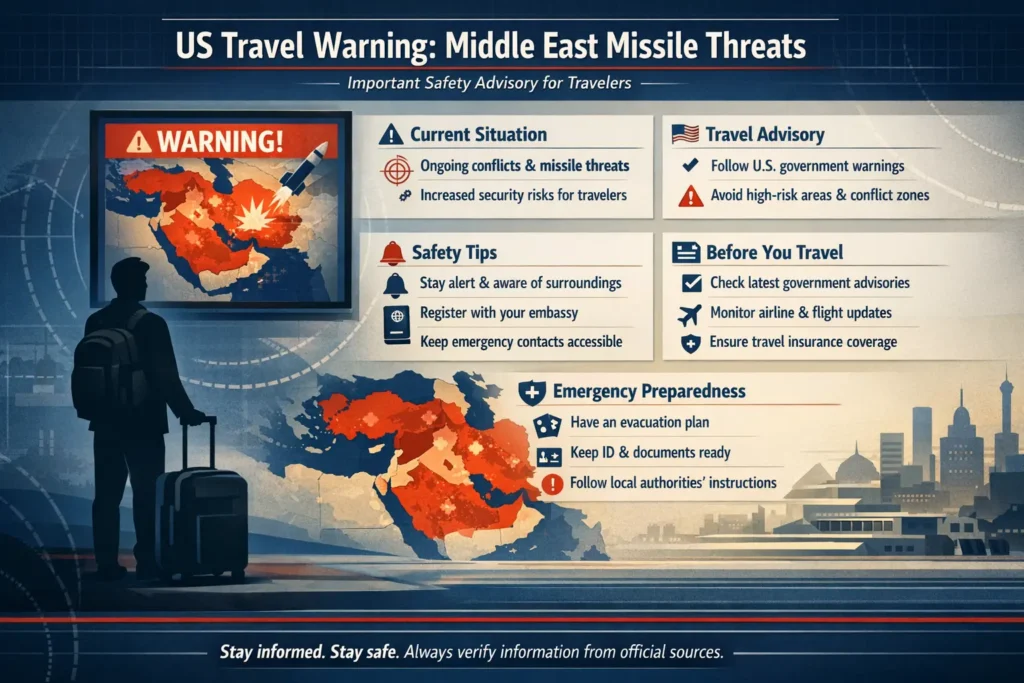
The US warns travelers of missile threats and conflicts in the Middle East. Stay alert and follow official updates. Check government advisories and flight information before traveling.
In this guide, you will learn what the warning means, why it matters, and how to protect yourself while planning travel.
What is the US Travel Warning for the Middle East?
Travel warnings identify safety concerns. For the Middle East, these include risks from ongoing conflicts. Always check updates when planning travel.
Middle East Travel Warning 2026
Travel warnings help people make informed decisions. Stay updated with official sources for guidance.
Missile Threats Travel Advisory Gulf Countries
Certain areas in the Gulf region require increased awareness. Travelers should follow official guidelines and remain vigilant for a safer journey.
US Warns Against Travel to the Middle East
The US advises caution in some areas for traveler safety. Always check before visiting.
US Travel Advisory UAE Saudi Arabia Bahrain
Advisories guide travelers on safety. These may change with regional events. Stay informed.
Middle East Travel Warning Updates
Travel warnings are updated regularly. Check changes to avoid risk.
Travel Risk UAE Saudi Arabia 2026
Travel to the UAE and Saudi Arabia in 2026 may present risks. Stay alert, follow local laws, and monitor advisories throughout your trip. Proper planning and awareness reduce disruptions.
Missile Threats Travel Advisory Gulf Countries Details
Advisories outline risks and safety measures to help travelers plan and stay aware.
Impact of Conflict on Travel Safety
Conflicts can disrupt travel and safety in some regions, causing delays or new risks. Check advisories and have backup plans.
Air Travel Risks in Gulf Countries
Flights may be delayed or rerouted for safety. Stay updated on flight status, stay connected with news, and be active on social media platforms to stay updated with the current war situation.
Government Travel Guidelines
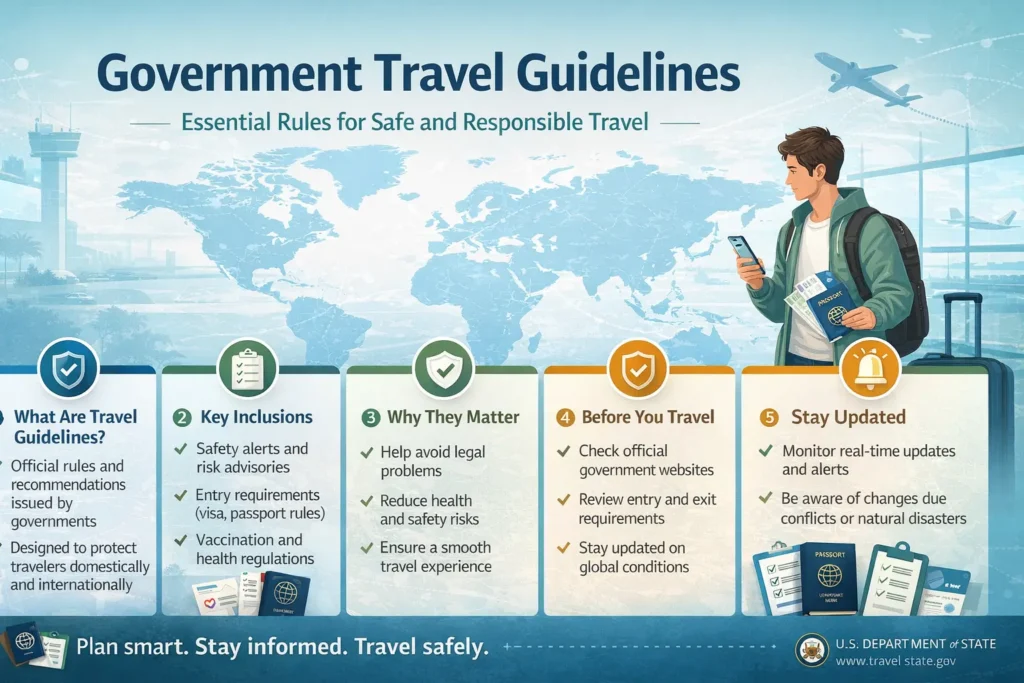
Government travel guidelines are official rules and recommendations designed to keep travelers safe when visiting domestic or international destinations. These guidelines may include safety alerts, entry requirements, vaccination rules, restricted areas, and advice on local customs or regulations. Following these recommendations helps travelers avoid legal issues, health risks, or unsafe situations. Governments often update these guidelines in response to current events, conflicts, or natural disasters, so it’s important to check them regularly before and during your trip. Adhering to these rules ensures a smoother, safer, and more responsible travel experience.
Travel Insurance for Risk Areas
Travel insurance provides protection in emergencies, covering medical and travel-related issues. Obtaining insurance is highly recommended.
Safe Alternatives for Travelers
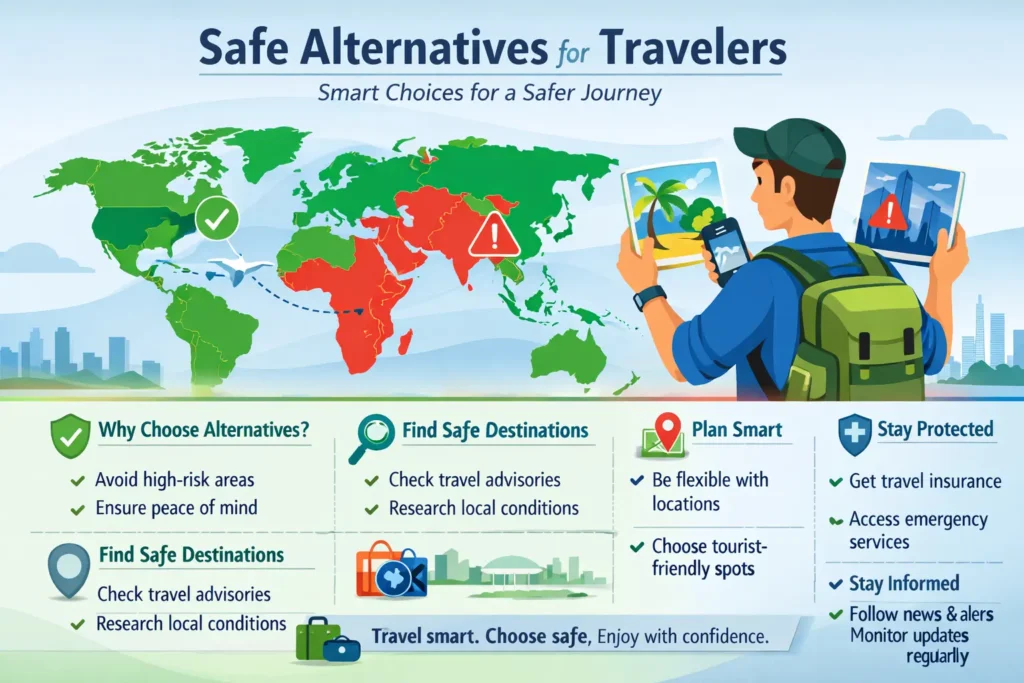
Travelers can significantly reduce risk by choosing safer alternative destinations rather than high-risk or conflict-affected areas. Careful planning, research, and awareness play a crucial role in ensuring a secure and enjoyable travel experience.
Before booking a trip, it is important to review government travel advisories and identify destinations with stable conditions, low crime rates, and good healthcare facilities. Many countries offer similar cultural, natural, or entertainment experiences without the associated risks of unstable regions.
Latest Middle East Travel Updates
- Stay informed with current news and travel alerts, as conditions can change rapidly. This helps you plan your trip carefully
- Research your destination, weather, and conditions before going. Advance booking helps prevent problems and get better options. Stay updated: Check official advisories and news often. This keeps you aware of risks or changes.
- Avoid risky areas: Stay away from places with conflict or safety risks. Pick safe routes and trusted spots to reduce danger.ou
- Keep documents safe: Carry copies of your passport, ID, and ticket. Keep originals secure and don’t share personal details with strangers. Follow local rules: Respect local laws and customs. This prevents trouble and ensures smooth travel. Use trusted transport: Always pick reliable taxis, hotels, and platforms. This keeps you safer and more comfortable. Stay connected: Share your plan and location with someone trusted. Keep your phone charged for emergencies.
- Get travel insurance: Insurance helps cover emergencies, delays, or problems. It gives peace of mind.unKeep emergency contacts: Save important numbers, such as the police, embassy, and hotel. This helps in urgent cases. Be alert in public: Watch your surroundings and protect your belongings. Avoid carrying excess cash or valuables. belongings safe. Avoid carrying too much cash or valuables.
Middle East Travel Warning FAQ 2026
Is there a current US travel warning for parts of the Middle East?
Yes. The US government has issued travel warnings for some Middle Eastern countries due to security risks, including regional conflicts and missile threats. Travelers are advised to stay alert and follow official updates
Are the UAE, Saudi Arabia, and Bahrain considered risky for travelers in 2026?
Yes. These Gulf countries may face certain security risks due to regional tensions. Travelers
Should I get travel insurance if visiting the Middle East?
Yes. Travel insurance is strongly recommended. It protects against medical emergencies, trip delays, cancellations, and other unexpected problems.
Can I ignore official travel advisories and still travel safely?
No. Ignoring travel advisories is dangerous. Conditions can change quickly, and areas once safe may become risky. Always follow official guidance to minimize danger.
Is it safe to visit conflict zones in the Middle East for tourism?
No. Traveling to areas experiencing conflict or missile threats is unsafe. Avoid high-risk zones and choose safer routes or destinations.
conclusion:
In conclusion, the US Travel Warning Middle East Missile Threats highlights real safety concerns that travelers should not ignore. Staying informed, following official advisories, and planning carefully can reduce risks. Always choose safer options, keep emergency plans ready, and remain alert. Smart preparation and awareness are key to ensuring a safe, smooth, and responsible travel experience in uncertain conditions.
“Discover safer destinations instead — Best Places to Visit in the USA.“
“Travel stress can affect your health — Understanding Mental Health and Wellness.“
“In difficult times, poetry speaks to the soul — When the Soul Bleeds — English Healing Poetry.“