
What Are the Fundamental Pillars of Health?
The fundamental pillars of health are the main areas that keep your body and mind strong for life. These include proper nutrition, regular physical activity, quality sleep, mental health, hydration, preventive care, healthy relationships, stress management, purpose, a clean environment, and daily consistency.
In this guide, you’ll find simple daily actions that protect your body and support long-term wellness. By focusing on these core pillars, you build a healthier, happier, and more balanced life step by step.
Understanding the Core Framework of the Pillars of Health
The pillars of health are key areas that support your body and mind. These include nutrition, exercise, sleep, mental health, hydration, prevention, relationships, stress control, purpose, environment, and consistency.
Why Do the Pillars of Health Matter for Long-Term Wellness?
These pillars of health prevent disease, improve energy, and protect mental balance. When all pillars are strong, your body works better, you age healthier, and your quality of life improves for many years.
How Does Nutrition Build a Strong Foundation for the Pillars of Health?
Nutrition builds a strong foundation for the pillars of health because food is the body’s main fuel. A balanced and nutrient-dense diet includes fruits, vegetables, whole grains, lean protein, and healthy fats. These foods give essential vitamins, minerals, fibre, and protein that your body needs daily.
What Defines a Balanced and Nutrient-Dense Diet?
A balanced diet includes fruits, vegetables, whole grains, lean protein, and healthy fats. Nutrient-dense foods give vitamins and minerals without too much sugar or unhealthy fat.
How Does Proper Nutrition Support Energy and Immunity?
Good nutrition fuels your body, supports cell repair, and strengthens your immune system. It reduces weakness, improves focus, and protects against infections and chronic diseases.
Why Is Physical Activity a Critical Pillar of Health?
Physical activity is a critical pillar of health because the human body is designed to move. Regular movement keeps muscles strong, bones dense, and joints flexible. It improves blood flow, supports heart and lung health, and helps maintain a healthy weight.
How Does Strength Training Improve Overall Health?
Strength training builds muscles, protects bones, improves posture, and supports metabolism. It reduces injury risk and helps maintain a healthy body weight.
What Role Does Cardiovascular Exercise Play in Longevity?
Cardio exercises like walking or cycling improve heart and lung health. They lower blood pressure, improve circulation, and reduce the risk of heart disease.
How Does Quality Sleep Strengthen the Pillars of Health?
Quality sleep is a powerful pillar of health because the body repairs and resets during rest. Deep sleep helps balance hormones that control hunger, stress, growth, and metabolism. It also repairs muscles, supports brain function, and strengthens the immune system.
Why Is Deep Sleep Essential for Hormonal Balance?
Deep sleep repairs tissues and balances hormones that control hunger, stress, and growth. Without deep sleep, hormones become unstable.
How Does Sleep Impact Mental and Physical Performance?
Good sleep improves memory, mood, focus, reaction time, and physical recovery. Poor sleep lowers energy and weakens immunity.
What Role Does Mental Health Play in the Pillars of Health?

Mental health is a central pillar of health because it shapes how you think, feel, and act every day. Strong mental health helps you make better decisions about food, exercise, sleep, and relationships. It supports emotional balance and clear thinking.
How Can Emotional Resilience Improve Overall Wellness?
Emotional resilience helps you handle stress, solve problems, and stay calm in the face of challenges. It supports healthy relationships and better decisions.
What Strategies Strengthen Mental Clarity and Stability?
Regular exercise, healthy sleep, prayer or meditation, journaling, and talking with trusted people improve mental clarity and emotional balance.
Why Is Hydration Considered a Core Pillar of Health?
Hydration is a core pillar of health because water is essential for every cell and organ in your body. It helps transport nutrients, remove waste, regulate temperature, and support digestion. Proper hydration keeps the brain alert, muscles working, and energy steady.
How Does Water Support Cellular and Metabolic Function?
Water helps transport nutrients, remove waste, control body temperature, and support digestion. Every cell needs water to function properly.
What Are the Risks of Chronic Dehydration?
Long-term dehydration can cause fatigue, headaches, kidney strain, poor concentration, and reduced physical performance.
How Does Preventive Healthcare Protect the Pillars of Health?
Preventive healthcare protects the pillars of health by finding problems early before they become serious. Regular checkups, health screenings, and vaccines help detect high blood pressure, diabetes, and cholesterol issues early.
Why Are Regular Health Screenings Important?
Health screenings check blood pressure, sugar, and cholesterol. They help find problems early before symptoms appear.
How Can Early Detection Prevent Chronic Disease?
Early detection enables timely treatment, lifestyle changes, and better recovery, reducing the risk of serious complications later.
Why Are Social Connections Essential to the Pillars of Health?
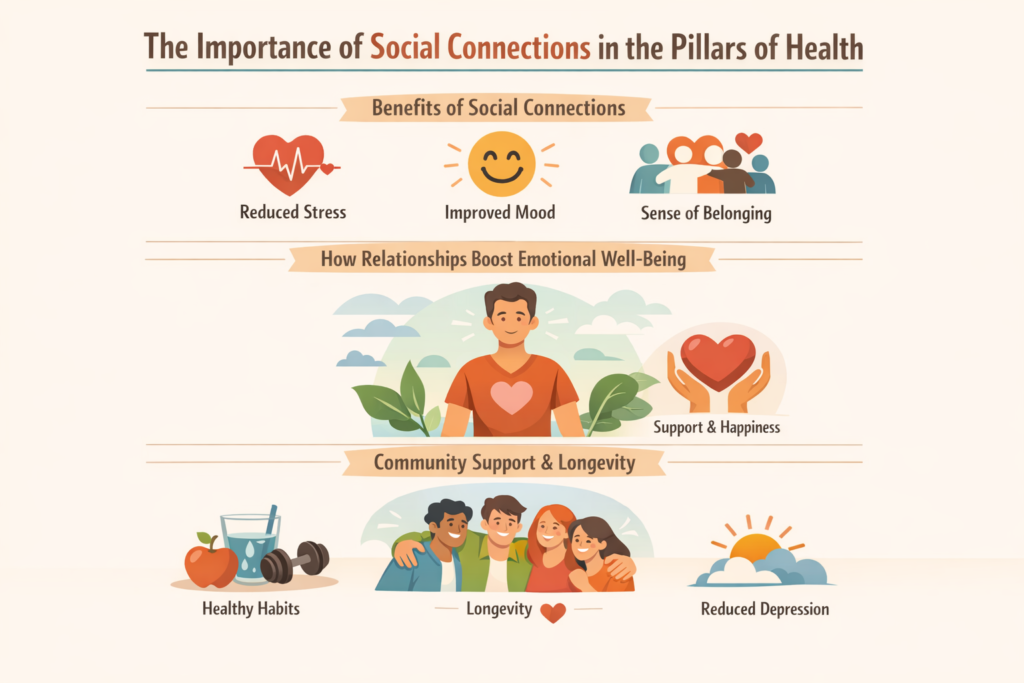
Social connections are essential to the pillars of health because humans thrive on relationships and community. Supportive friends, family, and social groups reduce stress, improve mood, and increase feelings of safety and happiness.
How Do Relationships Influence Emotional Well-Being?
Supportive relationships reduce loneliness, lower stress, and increase happiness. Strong bonds improve emotional security.
What Is the Impact of Community Support on Longevity?
Community support encourages healthy habits and reduces the risk of depression, helping people live longer and healthier lives.
How Does Stress Management Preserve the Pillars of Health?
Stress management preserves the pillars of health by protecting the body and mind from the harmful effects of chronic stress. Uncontrolled stress raises blood pressure, weakens the immune system, disrupts sleep, and affects digestion.
What Are the Effects of Chronic Stress on the Body?
Chronic stress increases blood pressure, weakens the immune system, disrupts sleep, and harms digestion.
Which Techniques Effectively Reduce Daily Stress?
Deep breathing, walking, regular exercise, time management, and relaxation practices help lower daily stress.
What Is the Importance of Purpose and Meaning in Health?
Having purpose and meaning is a key pillar of health because it motivates you to take care of your body and mind. When life has direction, you make healthier choices, stay disciplined, and keep long-term habits.
How Does Living with Purpose Improve Motivation?
Purpose gives direction and encourages healthy habits. It increases discipline and long-term commitment.
Why Does Personal Fulfilment Strengthen Mental Health?
Feeling fulfilled reduces anxiety and depression. It builds confidence and emotional strength.
How Does Environment Influence the Pillars of Health?
The environment influences the pillars of health by shaping your body, mind, and daily habits. Clean air, safe water, sunlight, low noise, and a calm home protect physical and mental wellness.
What Environmental Factors Impact Physical Wellness?
Clean air, safe water, sunlight, low noise, and safe housing protect physical health.
How Can We Create a Health-Supportive Living Space?
Keep your home clean, allow sunlight, reduce clutter, eat healthy foods, and create a calm sleep environment.
Why Is Consistency the Ultimate Multiplier of the Pillars of Health?
Consistency is the ultimate multiplier of the pillars of health because small daily habits build long-term results. Eating well, exercising, sleeping on time, managing stress, and staying hydrated every day create lasting wellness.
How Do Daily Habits Shape Long-Term Results?
Small daily actions like healthy eating, exercise, and proper sleep build strong long-term health.
Why Is Discipline More Powerful Than Motivation?
Motivation changes, but discipline keeps habits steady. Consistency protects and strengthens the pillars of lifelong health.
FAQ’S
FAQ 1: Can eating healthy really improve overall health?
Yes. A balanced diet rich in fruits, vegetables, whole grains, and lean proteins provides your body with energy, strengthens your immune system, and helps protect against long-term diseases. Nutrition is the foundation of strong pillars of health.
FAQ 2: Does regular exercise help you live longer?
Yes. Physical activity strengthens the heart, muscles, and bones. Cardio and strength exercises improve stamina, reduce disease risk, and boost mood, supporting long-term wellness.
FAQ 3: Can good sleep improve mental clarity?
Yes. Quality sleep repairs the brain, balances hormones, and improves focus, memory, and mood. Deep sleep supports both mental and physical health.
FAQ 4: Will taking vitamins replace a healthy diet?
No. Vitamins cannot replace the nutrients, fibre, and energy from real foods. Whole, balanced meals are needed to fully support your pillars of health.
FAQ 5: Is stress harmless if you ignore it?
No. Chronic stress harms the heart, sleep, immunity, and digestion. Ignoring stress weakens all pillars of health and increases the risk of illness over time.
Conclusion:
Strong health is never built on a single habit. It grows when all the Pillars of Health work together every day. Nutrition, movement, sleep, mental balance, hydration, prevention, relationships, purpose, environment, and consistency create lasting strength. Protect each pillar with small daily actions. Over time, these choices build energy, resilience, and lifelong wellness.
For a closer look at two pillars covered here, see our guides on understanding mental health and wellness and how to fall asleep fast. And when purpose and environment need a full reset, sometimes the answer is a change of place. Our Solo Travel Iceland guide is a good place to start.