
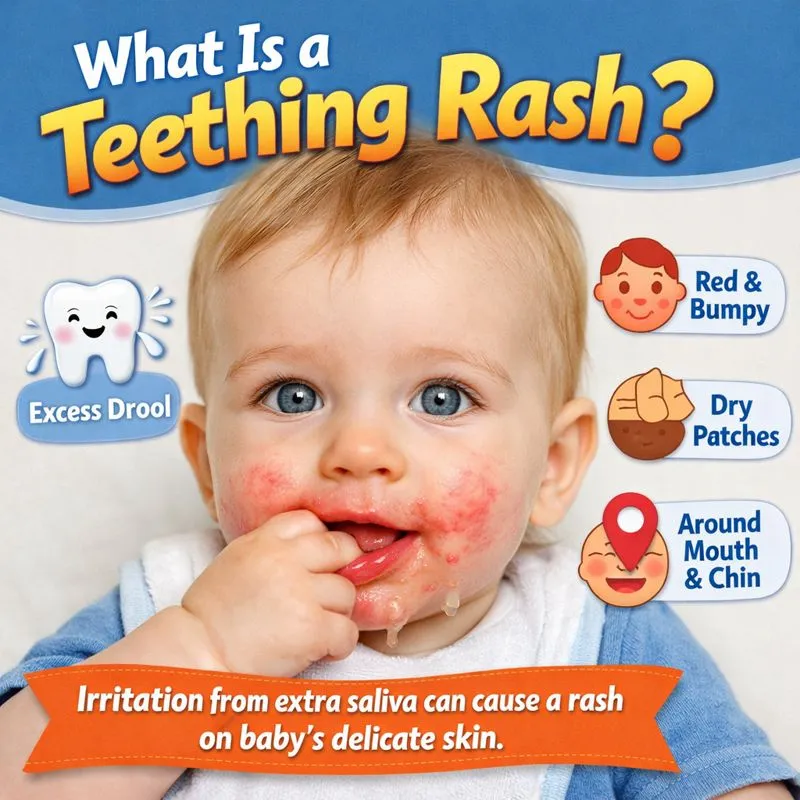
What are teething Rash
Teething rash is a common concern for parents when their baby begins teething. As extra saliva lingers on delicate skin, it can lead to redness, small bumps, or dry patches, most often around the mouth and chin, leaving many parents wondering how best to protect their child’s comfort.
In this article, you will understand what a teething rash is, why it happens, and how to protect your baby’s skin, which can help parents feel calm and confident.
What Causes Teething Rash in Babies?
The root cause of the teething rash is persistent drooling. When saliva remains on your baby’s skin, it keeps the area damp and can break down the skin’s natural barrier. This leaves sensitive skin vulnerable to redness, irritation, and small rashes, an unwelcome side effect during an already challenging stage.
What Does a Teething Rash Look Like?
A typical teething rash appears as red, dry, or slightly bumpy patches. The skin may feel rough or irritated to the touch. While you might notice small red spots, it’s reassuring to know that a standard teething rash does not include blisters, pus, or signs of fever that would suggest something more serious.
Where Does Teething Rash Commonly Appear?
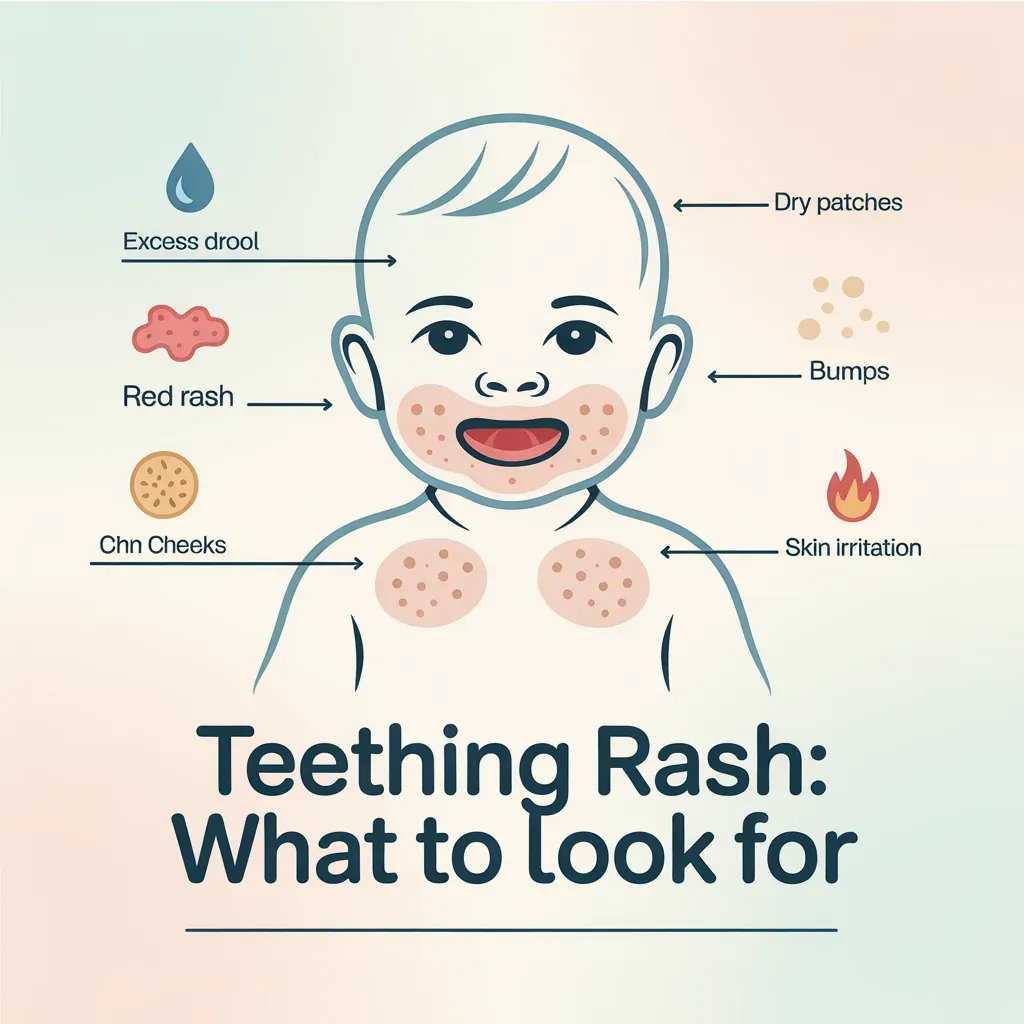
You’ll most often find a teething rash around the mouth, chin, cheeks, and neck where drool tends to collect. Occasionally, if saliva spreads, the rash can extend to the chest. These are the areas that stay damp the longest, making them more prone to irritation.
How Is Teething Rash Different From Other Rashes?
Teething rash mostly happens where drool collects, such as the mouth and chin. It does not spread fast, does not cause fever, and is not serious. Other rashes may appear on the body, cause strong itching, or come with illness
Teething Rash Painful or Itchy for Babies?
Most babies with teething rash are not in pain or experiencing significant itchiness. The skin may feel a bit uncomfortable, prompting your child to touch or rub the area, but you’ll likely find your baby remains cheerful and active throughout.
How Long Does a Teething Rash Last?
Teething rash may linger for a few days or, in some cases, a few weeks. The good news is that as drooling decreases and you keep your baby’s skin clean and dry, the rash will usually fade. Attentive care can speed up healing and restore your child’s comfort.
Gently wipe away drool as soon as you notice it, and keep the skin as dry as possible. Applying a thin layer of baby-safe cream, like petroleum jelly, can help shield sensitive skin. Soft bibs and gentle wiping are your best tools for protecting your baby and minimizing irritation.
How Can Parents Prevent Teething Rash?
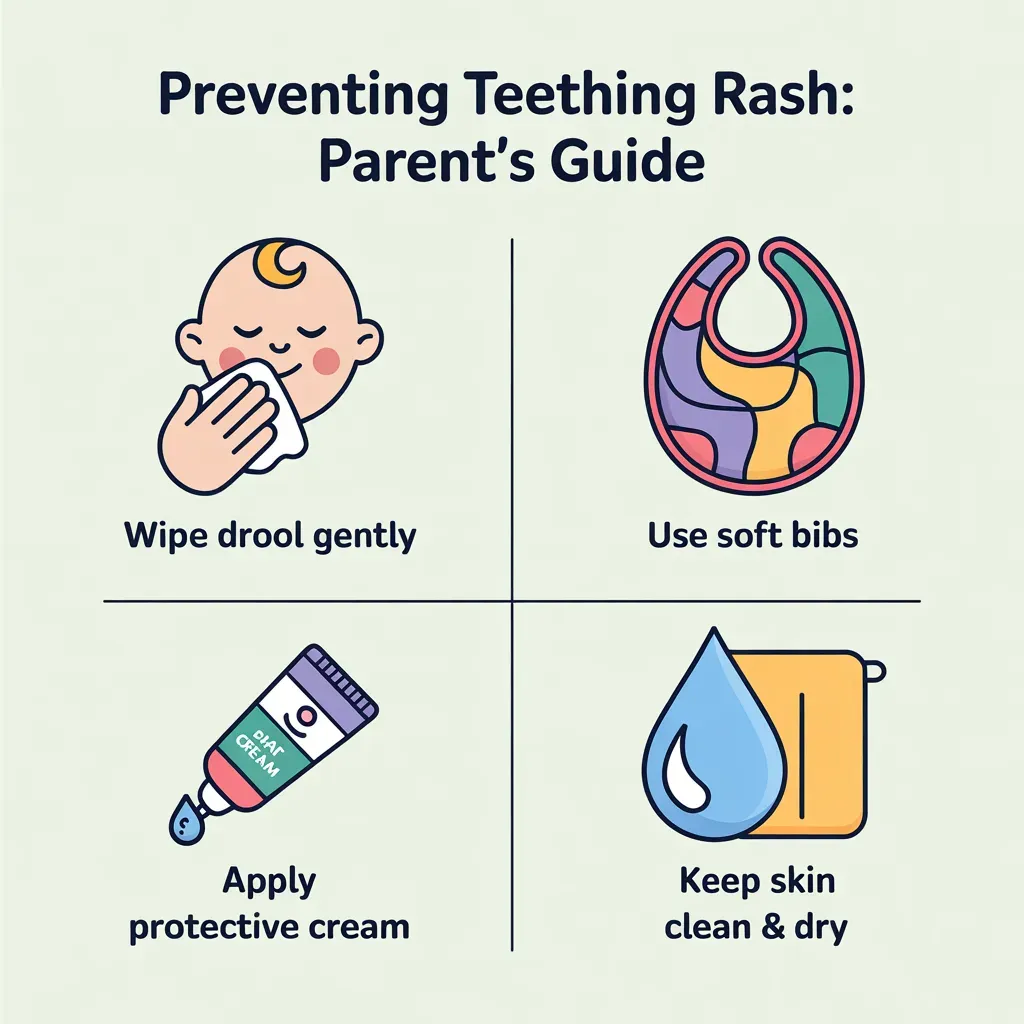
Parents can help prevent a teething rash by wiping away drool frequently, using soft bibs, and applying a protective cream. The main way to avoid rash is to keep the baby’s skin clean and dry.
. When Should You See a Doctor for Teething Rash?
If you notice the rash spreading, developing pus or bleeding, causing a fever, or not improving after several days, it’s time to consult your doctor. These symptoms may indicate an infection or another skin issue that requires prompt attention.
Can Teething Rash Become Infected?
If the skin breaks, the teething rash can become infected when germs enter. Watch for swelling, yellow fluid, warmth, or pain—these are signs of infection. Acting quickly with treatment can prevent further skin problems and keep your baby comfortable.
12. What Products Are Safe to Use for Teething Rash?
Choose fragrance-free baby moisturizers, petroleum jelly, or zinc oxide cream to soothe and protect your baby’s skin. Avoid strong soaps or scented creams, and always select gentle products designed specifically for babies.
FAQS
Can teething cause a rash in a baby
Yes. Teething causes more drooling. When saliva remains on the skin for a long time, it can irritate the skin, and yes, teething rash is very common.
Is a teething rash common in babies?
Yes. A teething rash is very common. Many babies drool a lot while teething, which can make the skin wet. Sensitive baby skin is easily irritated, which can lead to a rash.
Can a teething rash heal on its own?
Yes, teething rash usually heals on its own when you keep your baby’s skin clean and dry. Regularly wiping away drool and using a gentle baby cream can help the rash clear up more quickly.
Is a teething rash dangerous for babies?
No, a teething rash is not dangerous. It is a mild skin irritation caused by saliva, and with simple care, it usually disappears without causing harm to your baby.
Does a teething rash always need medicine?
No. Most teething rashes do not need medicine. Simple home care, like keeping the area dry and using baby-safe cream, is usually enough.
Conclusion:
Teething rash is a common and harmless condition caused by excess drooling during teething. With gentle care, regular cleaning, and keeping your baby’s skin dry, it usually clears on its own. Using baby-safe creams and watching for warning signs can help parents protect their baby’s comfort and prevent irritation from getting worse.