
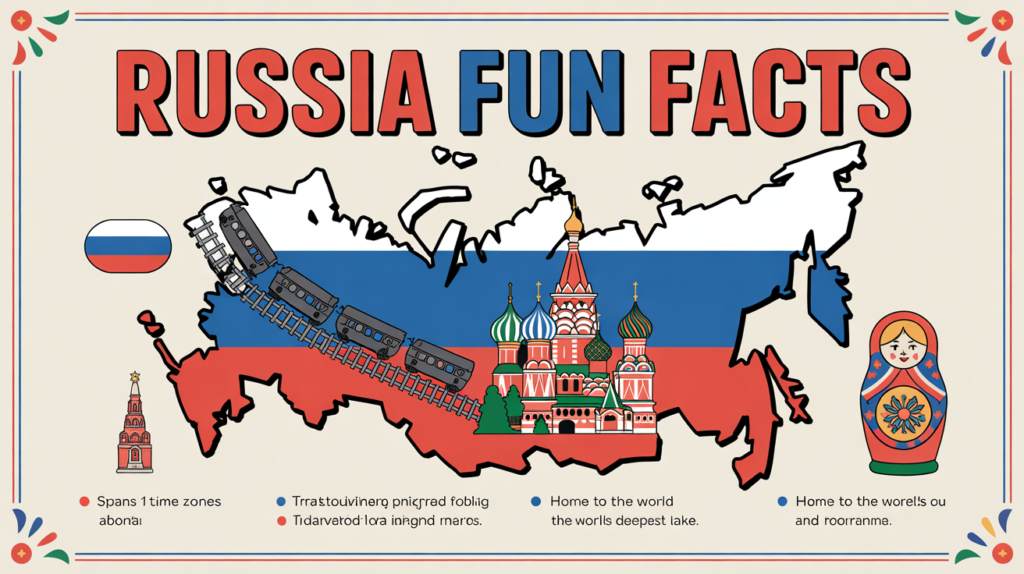
Russia is a vast country that spans much of northern Eurasia. It has a fascinating history and is full of diversity. Russia is a country of incredible diversity and rich history. From its majestic landscapes to its rich cultural heritage there are many fascinating aspects that make it stand out.
Russia is a vast country with a diverse range of landscapes, from the frozen tundras in Siberia to bustling cities like Moscow and St. Petersburg. The vibrant culture of Russia, its historical landmarks and its resilient people are all a reflection of this diversity.
The Key Takeaways
- The vastness and diversity of the Russian landscape is well-known.
- The country is rich in culture and history.
- Russia offers a wide range of attractions, from historical landmarks to contemporary cities.
- The unique combination of traditional and contemporary elements in Russia makes it fascinating.
- People and culture reflect the country’s strength and resilience.
Russia: Geographic marvels of the largest country in the world
Russia is the largest country in the world. Its geography has many unique features. It covers 17 million square kilometers and encompasses an array of landscapes, ecosystems, and climatic zones.
Spanning 11 Time Zones
Russia spans 11 time zones. It is a vast country, experiencing a variety of times at once. The vastness of Russia means that it is morning in one area and evening in another. This shows the country’s geographical spread.
Lake Baikal is the deepest lake in the world.
Lake Baikal is located in southern Siberia and is the largest freshwater lake on earth by volume. About 20% of freshwater in the world is found here. It also contains over 2,500 different species.
“Lake Baikal, a natural wonder and sacred sea, has captured the hearts of many people with its pristine beauty.
The 14 Countries that Share Borders
Russia has 14 international borders, making it the country with the largest number of borders. This long border highlights Russia’s strategic location between Europe and Asia. It facilitates cultural and economic exchanges.
| Country | The length of the border with Russia |
| Norway | 195.7 km |
| Finland | 1 340 km |
| Estonia | 334 km |
The geographical wonders of Russia are testaments to the fact that it is a land of superlatives. It offers a wealth natural beauty, diverse eco-systems, and strategic places which have shaped Russia’s history and culture.
Fascinating facts about Russia’s rich history
When you delve into Russia’s history, you will discover a wealth of fascinating facts. These facts highlight the richness of its historical heritage. Russia’s fascinating and complex history has fascinated historians and enthusiasts.
The 300-Year Rule of the Romanov Dynasty
The Romanov Dynasty ruled Russia over 300 years and is considered one of the most important periods in Russian History. Michael I, the first Romanov Tsar was crowned in 1603, marking the start of a new age. Peter the Great was a notable figure in the dynasty, modernizing Russia and expanding its borders. Peter the Great said that “a great empire is like a pie with a crust you have to break in order to see the filling.” This period saw significant cultural, military, and political developments that helped shape Russia’s identity.
From Soviet Union to Modern Russia
The transition of the Soviet Union into modern Russia was an important moment in Russian history. The Soviet period, which began in the year 1922, was marked by communist ideologies and a centralized economy. In 1991, the Soviet Union was dismantled. This marked a major shift in society towards an open and democratic one. As
“The collapse and fall of the Soviet Union is a geopolitical disaster of the 20th Century,”
Vladimir Putin noted the impact of this historic event. Russia is evolving today, as it balances its rich history and modern aspirations.
History’s Most Influential Figures
Numerous historical figures from Russia have changed the course of history. These individuals, from the literary genius Leo Tolstoy and the revolutionary ideas of Vladimir Lenin to the literary geniuses of Tolstoy have left lasting legacy. Yuri Gagarin is another icon whose achievements inspire. The rich history of Russia is woven by these individuals and others. It’s a fascinating topic to explore.
Russian Cultural Treasures & Artistic Heritage
Russia’s rich cultural heritage, from its magnificent ballet to its depth of literature, is a treasure chest of artistic achievements. Russian culture is a major influence in the world. It has shaped various art forms, and left an indelible impression on human history.
Ballet and Classical Music Excellence
Russia has a tradition of excellence when it comes to ballet and classical music. Bolshoi Ballet, a world-renowned ballet company known for its artistic expression and technical precision, is one of the best in the business. Russian composers such as Tchaikovsky, Rachmaninoff and others have produced some of the most iconic classical pieces. They continue to inspire audiences around the world.
Tolstoy Dostoevsky and Pushkin: Literary Giants
Russian literature has giants such as Leo Tolstoy and Fyodor Dostoevsky. Alexander Pushkin is also a major figure in the Russian literary world. These works are not only literary masterpieces, but also windows to the Russian soul. They explore themes such as love, morality and the human condition. War and Peace, by Tolstoy and Crime and Punishment, by Dostoevsky is considered one of the greatest novels written. They continue to fascinate readers with their profound insight.
The Mysterious Russian Soul Concept
The idea of the “Russian Soul” has been explored by literature and philosophy. It is complex and multifaceted. The concept encompasses a sense of depth, spirituality and resilience in the Russians, which is influenced by their history, geography and cultural traditions. This concept is associated with a deep sense of community and an Orthodox Christian connection, as well as a capacity to suffer and be awed.
Russian Language and Communication: Surprising Facts
Russian is the largest geographical language in the world. It has many fascinating facts that show its beauty and complexity. The language is rich in history and closely linked to the cultural and political development of Russia.
The Cyrillic Alphabet origins
The foundation of Russian is the Cyrillic script, which was created by Saints Cyril & Methodius in the 9th Century. The alphabet was created to translate Christian texts in Slavic language, and has become an integral part Russian identity. Over the centuries, the original alphabet underwent changes that led to the modern Russian script we use today.
Russian expressions that don’t translate well
Russian has many idiomatic expressions which are difficult to translate into other languages. The Russian language is full of idiomatic expressions that convey emotions and situations unique to the culture. Phrases such as “shivorot navyvorot” (“inside out”) or “dusha” (soul in heels) are examples. These expressions give Russian a unique flavor and offer insights into Russian culture.
What Russian has done to other languages
Russian, despite its complexity, has had a profound influence on many languages, particularly those in the former Soviet Union. The global vocabulary includes words like “sputnik”, “perestroika”, and many others. The Russian language has also influenced the linguistic landscape in countries that once belonged to the Soviet sphere.
| The Language of the Speaker | Russian loanwords | The word “meaning” is used to describe the meaning of the phrase |
| English | Sputnik | Satellite |
| German | Perestroika | Restructuring |
| French | Apparatchik | Communist Party official |
The Architectural Wonders of Russia
The rich cultural and historical diversity of Russia can be seen in the architectural landscape. The vast Russian country has some of the world’s most unique and fascinating architectural structures.
St. The Story Behind St.
St. Basil’s Cathedral is located in Moscow’s Red Square and is one of Russia’s iconic landmarks. This colorful cathedral, built between 1555-1561 to commemorate the Kazan capture by Ivan the Terrible, is one of Russia’s most iconic landmarks. The unique combination of Russian Orthodox architecture and medieval Russian styles make it stand out.
Metro Moscow: Underground Palaces
The Moscow Metro is more than just a transport system. It’s a palace underground. The Moscow Metro was opened in 1935 and is known for its elaborate stations. Many of them resemble palaces thanks to their intricate mosaics. The design of the metro reflects the grandeur and ambition of Soviet times.
| Station Name | Notable Features | Opening Year |
| Komsomolskaya | Mosaics of scenes from World War II | 1935 |
| Mayakovskaya | Design in stainless steel and futuristic style | 1938 |
| Ploshchad Revolyutsii | Sculptures of Soviet Heroes | 1935 |
The Wooden Architecture in the Russian North
In the Russian North, you’ll find a collection of unique wooden architecture including churches, fortified buildings, and chapels. These wooden buildings, decorated with intricate carvings and dating back to medieval times, showcase the cultural heritage of the region. Kizhi’s wooden churches are particularly well-known.
The architectural marvels of Russia are a reflection on its rich history, diverse cultural influences, as well as its vast geographical expanse. The grandeur of St. From the grandeur of St.
Russian Cuisine: Beyond Caviar and Vodka
Beyond stereotypes, Russian food offers a fascinating range of traditional dishes and practices deeply rooted in the country’s history and geography. Russian cuisine is known to be hearty, comforting and often made from locally sourced ingredients.
The Best Traditional Dishes to Try on Your Visit
The Russian cuisine is full of delicious dishes that everyone should try. Borscht is a classic beet soup. Pelmeni are Russian dumplings stuffed with meat. Blini is a Russian favorite. Try it with jam or sourcream for a true Russian experience.
| Dish | Description |
| Borscht | A beet soup, often served with sourcream. |
| Pelmeni | Russian dumplings filled minced meat, served with butter, sourcream, or broth. |
| Blini | The pancakes are thin and served with a variety of toppings, such as jam, caviar, sourcream, etc. |
The Russian Tea Culture
In Russian culture, tea has a very special place. Drinking tea is a tradition that brings people together. Russians drink their tea with sugar or jam and sometimes with a lemon slice.
Superstitions and Unique Food Traditions
Russians have a number of unique food superstitions and traditions. It’s unlucky to eat at the corner of the dining table. You should also try some of every dish. Bread is also used as a sign of hospitality.
Explore Russian cuisine to gain a better understanding of its rich culture and heritage.
Celebrate Russian traditions and holidays in a unique way
Russia’s rich cultural heritage is evident in its traditions and celebrations. These customs reflect not only the rich history of Russia, but also the vibrant spirit of its people.
Maslenitsa – The Pancake Festival
Maslenitsa, a Russian traditional festival, celebrates the end to winter. The festival is marked by the consumption and symbolism of pancakes. This festival is also a time of family reunions, feasting and different winter goodbye rituals. The burning of straw effigies, which represents the fading away of winter, is one of the highlights.
Russian Bath Houses Culture (Banya).
The Russian bathhouse or banya is an important part of Russian culture. The banya is not only a place to wash your hands, but also a place where people can relax, talk, or even conduct business. The banya experience includes high temperatures, steam and, sometimes, a switch from cold water or even snow. This is thought to have many health benefits.
Interesting Facts about Christmas in Russia
In Russia, Christmas is a season of deep reflection and celebration. A fun fact about Christmas in Russia: it’s celebrated on the 7th of January, according to the Orthodox calendar. Russians exchange gifts and decorate their homes, while also attending midnight mass. Traditional Christmas foods include kutia (a sweet grain dish) and borscht. Caroling, folk rituals and other festive activities are also part of the festive season.
These unique celebrations and traditions highlight the richness and diversity of Russian culture. It is a fascinating place to visit.
Russian Space Exploration and Scientific Achievements
The impact of Russia on science is indisputable, especially when it comes to space exploration. The legacy of scientific achievements in Russia has been immense, impacting various fields such as space travel and mathematical education.
First in Space Yuri Gagarin & Beyond
In 1961, Soviet cosmonaut Yuri Gagarin became the first person to travel into outer space. This historic achievement marked the start of human spaceflight. Since then, Russia continues to play an important role in space exploration. It has contributed significantly to the development and collaborations with other countries.
Russian inventions that changed the world
Numerous groundbreaking inventions were born in Russia. Konstantin Tsiolkovsky was a pioneer of rocket theory and laid the foundations for modern rocket science. Fedor Pirotsky developed the first electric tram and Russian programmers created the first antiviral computer software.
The Secrets of Russian Mathematics Education
The Russian mathematics curriculum is known for its effectiveness and rigor. Many of the world’s best mathematicians, scientists, and problem-solvers are a result of the emphasis placed on logical reasoning and problem-solving. The strong mathematical foundation has played a major role in Russia’s scientific accomplishments.
Wildlife and Natural Phenomena of Russia
Russia is home to a wide range of natural phenomena, from the Siberian Tigers to extreme weather. The diverse landscapes of Russia, from the Arctic tundra, to the temperate forest of the Far East, are home to a variety of plants and animals.
Siberian Tigers, Rare Species and Other Species
The Siberian Tiger, which is one of the biggest cats in the entire world, is among the rare and endangered species that call Russia home. These magnificent creatures, as well as their habitats, are protected by conservation efforts. Amur leopards and Snow leopards are also rare species in Russia.
| Rare Species | Habitat | Conservation Status |
| Siberian Tiger | Russian Far East | Endangered |
| Amur Leopard | Primorsky Krai | Critically Endangered |
| Snow Leopard | Altai Mountains | Vulnerable |
The Mysterious Tunguska event
A massive explosion in 1908 wiped out trees on an area larger than 2,000 square km. Scientists continue to debate the cause of the Tunguska Event. Theories range from a meteorite impact or comet to an airburst triggered by a comet.
Extreme Weather Records
Russia’s extreme weather is well-known, with temperatures that vary greatly from summer to winter. Verkhoyansk, a city in Russia, holds the record of the largest temperature range. It goes from -67.8degC up to 38degC. These extremes show the vast climate diversity of Russia.
Modern Russia: Fun Facts about Moscow Russia and Urban Life
Moscow, Russia’s heart, seamlessly blends historic grandeur and modern vibrancy. The contrast in architecture, culture, and daily life of the residents is apparent.
Hidden Gems of Moscow
Moscow has many hidden gems. The Kolomenskoye Museum-Reserve showcases the architectural heritage of the country, while the VDNH Exhibition Center is a testament to Soviet Innovation. Architectural contrasts in the city are stunning, ranging from the onion-domed St. The contrasts in architecture are striking, from the onion domes of St.
New Generation of Russians
The new generation is driving the change in Moscow by embracing technology. Many of them are multilingual and have international experience. They are a cosmopolitan group. This generation is shaping the cultural and economic future of the city.
Technology and Innovation
Moscow is the capital of innovation and technology in Russia. Numerous tech startups are located in the city, especially those working in AI, cybersecurity and fintech. Moscow Innovation Cluster supports entrepreneurs and inventors to foster a vibrant eco-system.
| Aspect | Description | Impact |
| Architecture | Mixture of historic and modern buildings | Creates a unique urban landscape |
| Cultural Events | Festivals and exhibitions of all kinds | Diversity and attraction of culture |
| Technology | Hub for innovation and startups | Economic growth and modernization is a key driver of economic growth |
Why Russia is one of the most fascinating countries in the world
Russia continues to capture the imagination of millions around the globe. It’s not surprising that Russia has so many interesting facts. With its rich history, vast landscapes and cultural heritage, there is a lot to learn about the country. Russia is unique in many ways. From being the largest country on earth, spanning 11 different time zones, to its contributions to space exploration.
When you explore fun facts about Russia, you discover a country with a strong cultural identity shaped by historical figures, literary giants and artistic achievements. The Russian language has been influenced by other languages thanks to its Cyrillic script. This adds to the fascinating cultural tapestry of Russia. St. Basil’s Cathedral or the traditional Russian cuisine, Russia offers something new and interesting in every aspect. The traditional Russian cuisine or St.
One fun fact that is unique about Russia is the blend of modern and traditional elements. This includes everything from the underground palaces in Moscow Metro to its technological and innovative advancements. When we examine fun facts about Russian history and culture, it becomes clear that Russia is a complex and diverse country.
FAQ
What are some interesting facts about Russia
The largest forest in the world, the Taiga Forest, is located in Russia. Lake Baikal, the deepest lake on earth, is also found here. Russia is a country rich in culture, history and traditions.
What are some fun facts you can tell about Christmas in Russia
As Russia follows the Orthodox Calendar, Christmas is celebrated in Russia on the 7th of January. This is a time of traditional foods, family gatherings, and decorations.
What are the unique features of Russian culture
The rich literary heritage of Russian culture, including famous authors such as Tolstoy or Dostoevsky, is well-known. The Bolshoi Ballet and other classical music companies are also very well-known.
What are some interesting facts about Moscow?
Moscow has a long and rich history. It is home to many landmarks, including the Kremlin (Russian for “Kremlin”), Red Square (Russian for “Red Square”), and St. Basil’s Cathedral. The city is also a center for innovation and modern technology, with an active cultural scene.
What are some of the traditional Russian dishes?
Russian cuisine includes dishes such as borscht and beef stroganoff. The rich culture of tea and the traditional desserts Pryanik are also popular.
What are some of the unique Russian traditions and customs?
Russia is home to a variety of traditions. These include the Maslenitsa festival and the Banya culture which includes sauna-like bathhouses. Russia is also known for its strong superstition.
What are some interesting facts about Russian communication and language?
The Russian language is written in the Cyrillic script and contains a lot of difficult-to-translate expressions. Many words from Russian have been borrowed by other languages.
What are some of Russia’s scientific achievements?
The Russians have a long history of scientific achievements, and Yuri Gagarin’s flight was a pioneering one. The country is also well-known for its contributions to math education.