
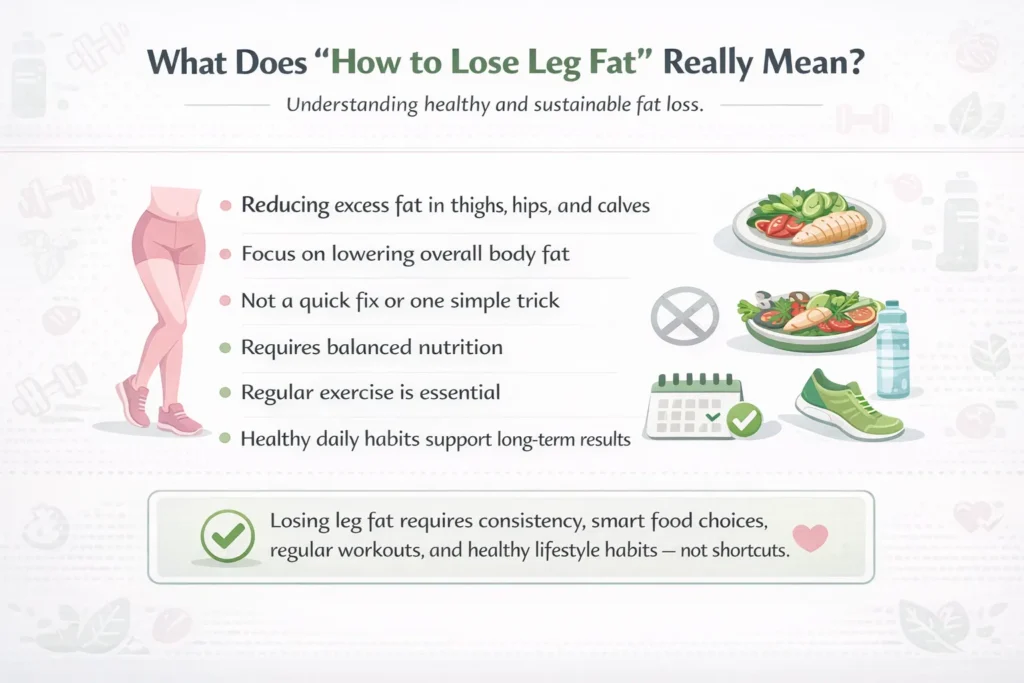
What Does “How to Lose Leg Fat” Really Mean?
How to lose leg fat means reducing excess fat in the thighs, hips, and calves by lowering overall body fat. It is not about one quick trick. It needs the right food, regular exercise, and healthy daily habits.
In this guide, you will learn how to lose leg fat using safe, easy, and practical methods that anyone can follow.
What Causes Excess Fat in the Legs?
Excess leg fat usually happens when you eat more calories than you burn. Low activity, hormonal imbalance, poor sleep, and high stress also increase fat storage in the lower body. Genetics strongly affect where your body stores fat. If your parents have heavier thighs, you may have the same body pattern.
How Do Hormones Influence Lower Body Fat?
Hormones such as estrogen, insulin, and cortisol regulate fat storage. When these hormones are unbalanced, the body may store more fat in the hips and thighs.
Can a Sedentary Lifestyle Increase Leg Fat?
Yes. Sitting for long hours and not exercising slows metabolism. This can lead to fat gain, including in the legs.
3. Can You Lose Leg Fat Without Losing Overall Weight?
In most cases, no. To lose leg fat, you need to lose overall body fat. Healthy fat loss happens when you combine a proper diet and exercise. Spot reduction means trying to burn fat from only one area, like the thighs. Research shows it does not work. Fat loss occurs throughout the body.
Full-body fat loss improves health and body shape. When total fat decreases, legs naturally become slimmer. With regular workouts and balanced eating, visible changes may appear in 4 to 8 weeks. Consistency is key.
4. What Are the Best Exercises to Lose Leg Fat?
The best exercises combine strength training and cardio. They help burn calories and shape leg muscles simultaneously.
Are Squats Effective for Slimmer Legs?
Yes. Squats strengthen thighs and glutes. They help tone legs and improve lower-body strength.
How Do Lunges Help Tone the Thighs?
Lunges target the front and back thighs. They improve muscle definition and balance.
Do Step-Ups Improve Leg Definition?
Yes. Step-ups work thighs and calves while improving stability and endurance.
5. Is Cardio Necessary to Lose Leg Fat?
Cardio helps burn extra calories. It supports overall fat loss, which also reduces leg fat. Running burns more calories quickly. Walking is safer for beginners. Both help if done regularly. Cycling activates thighs and calves. It burns calories while strengthening leg muscles.HIIT burns more calories in less time. It supports faster overall fat loss when combined with a healthy diet.
6. What Strength Training Moves Help Reduce Leg Fat?
Strength training builds muscle, which increases metabolism and shapes legs. Moderate weights improve muscle tone and strength without making legs bulky. Around 12–15 reps per set helps build endurance and shape muscles. Around 12–15 reps per set help build endurance and shape muscles. Resistance bands improve muscle activation and are good for home workouts.
7. What Should You Eat to Lose Leg Fat?
You need balanced meals with protein, healthy fats, and complex carbs. Avoid junk food and sugary drinks. Fat loss happens when you burn more calories than you eat. Lean protein, vegetables, fruits, nuts, seeds, and whole grains support healthy fat loss. Reduce refined carbs like white bread and sugar. Keep healthy carbs like oats and brown rice.
8. Does Protein Help in Losing Leg Fat?
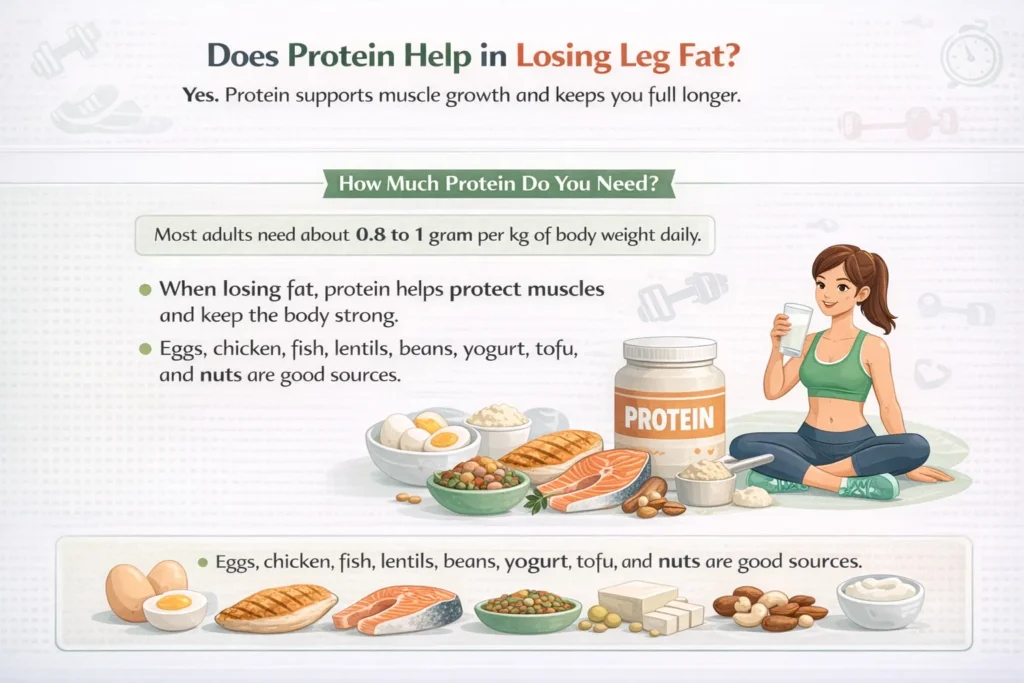
Yes. Protein supports muscle growth and keeps you full longer. Most adults need about 0.8 to 1 gram per kg of body weight daily. When losing fat, protein helps protect muscles and keep the body strong. Eggs, chicken, fish, lentils, beans, yoghurt, tofu, and nuts are good sources.
How Does Water Intake Affect Leg Fat Loss?
Water supports metabolism and digestion. It also helps reduce bloating. Drinking enough water supports calorie burning and reduces overeating. Proper hydration helps reduce water retention and swelling. About 2–3 litres daily, depending on body size and activity level.
Can Lifestyle Changes Help Reduce Leg Fat?
Yes. Daily habits affect fat storage and weight control.7–9 hours of sleep helps balance hunger hormones and supports fat loss. High stress increases cortisol, which may increase fat storage. Walking, stretching, and staying active increase daily calorie burn
11. Are There Natural Remedies to Lose Leg Fat?
Natural methods focus on exercise, diet, and a healthy lifestyle.
- Regular home exercises like squats and lunges can tone legs.
- Massage improves circulation but does not directly remove fat.
- Most people can lose leg fat with a proper diet and workouts.
How Can You Maintain Slim and Toned Legs Long-Term?
- Long-term results need consistency, patience, and healthy habits.
- Exercise at least 4–5 days per week with strength and cardio.
- Balanced eating, regular movement, good sleep, and stress control prevent fat gain.
- Set small goals, track progress, stay patient, and make fitness part of your daily routine.
FAQ’s
1. Can you really lose leg fat with exercise?
Yes. Regular strength training and cardio help reduce overall body fat. When total fat decreases, leg fat naturally decreases over time.
2. Do squats help slim your legs?
Yes. Squats strengthen and tone thigh muscles. They improve leg shape and support fat loss when combined with a healthy diet.
3. Is a calorie deficit important for losing leg fat?
Yes. You must burn more calories than you eat. This is the main rule for reducing body fat, including fat in the legs.
4. Can you lose only leg fat without losing weight overall?
No. The body does not burn fat from just one area. Fat loss occurs throughout the body.
5. Are supplements necessary to lose leg fat?
No. Most people can lose leg fat with balanced eating, exercise, proper sleep, and daily movement. Supplements are not required for real results.
Conclusion:
Losing leg fat takes time, patience, and the right daily habits. By combining regular exercise, balanced nutrition, proper hydration, and healthy sleep, you can gradually slim and tone your legs. Remember, how to lose leg fat is about overall fat loss, not quick fixes. Stay consistent, track progress, and focus on long-term healthy routines for lasting results.