
What is a high-protein, low-calorie breakfast?
A high-protein, low-calorie breakfast provides about 20–30 grams of protein while keeping calories between 250 and 400. It helps control hunger, protect muscles, and support weight goals. This balance gives steady energy without making you feel heavy or sleepy.
This guide helps you control your weight, muscle strength, and steady energy. The goal is balance — more protein, fewer empty calories. With the right start in the morning, your whole day feels active, focused, and healthy.
Why Should We Choose a High-Protein, Low-Calorie Breakfast?
Choosing this type of breakfast helps manage hunger, reduce cravings, and maintain muscle strength. It supports weight control and helps stabilise energy throughout the morning. It is a smart and practical health habit.
Does It Help with Weight Loss?
Yes, it supports weight loss by keeping you fuller for longer. When hunger is controlled, you eat fewer extra calories during the day, making fat loss easier.
Can It Improve Metabolism?
Protein requires more energy to digest compared to fats and carbs. It also supports muscle mass, and muscles naturally burn more calories even at rest.
What Are the Best High-Protein, Low-Calorie Breakfast Foods?
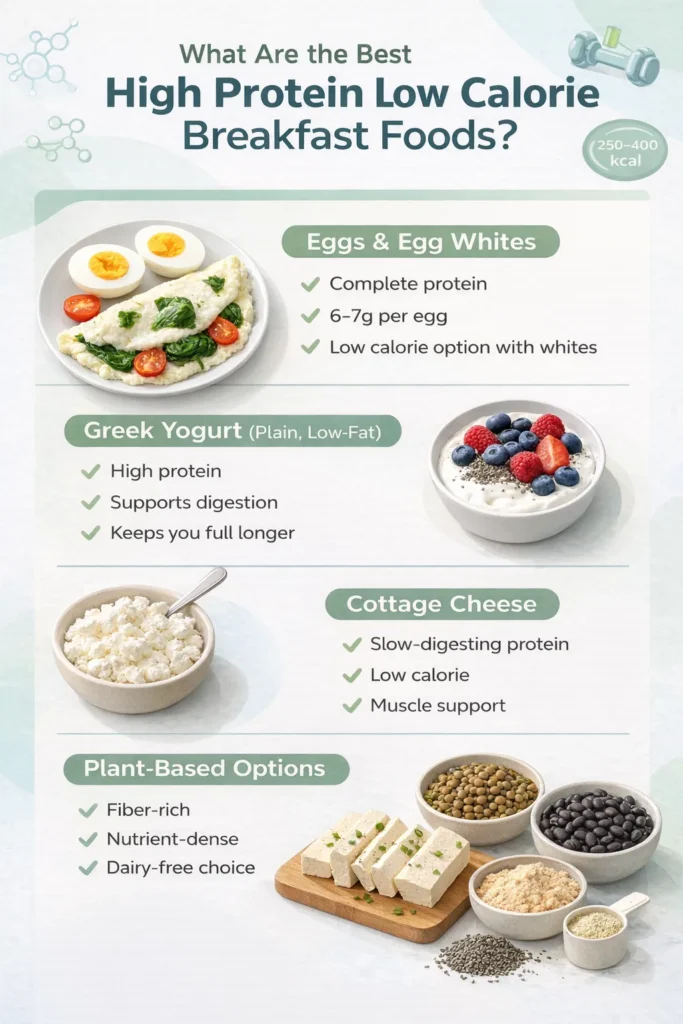
The best foods include eggs, egg whites, Greek yoghurt, cottage cheese, tofu, and protein smoothies. These foods give strong nutrition while keeping calories under control.
Are Eggs and Egg Whites the Best Option?
Eggs provide complete protein. Egg whites give high protein with fewer calories. Mixing whole eggs with whites provides a balanced nutrition and calorie profile.
Is Greek Yoghurt a Smart Choice?
Greek yoghurt is high in protein and low in calories, especially plain low-fat types. It also supports digestion and keeps you full.
Can Plant-Based Proteins Be Included?
Yes, tofu, lentils, beans, chia seeds, and plant protein powder are good options. They provide fibre and important nutrients without excess calories.
How Many Calories Should a High-Protein, Low-Calorie Breakfast Contain?
Most people benefit from 250–400 calories at breakfast. The exact amount depends on body weight, goals, and activity level. Protein must be included to maintain fullness.
What Is the Ideal Calorie Range for Fat Loss?
For fat loss, 250–350 calories is usually effective. It creates a calorie deficit while still providing enough energy.
How Much Protein Should We Aim For?
Aim for 20–30 grams of protein at breakfast. Active individuals may require slightly more to support recovery.
Should We Adjust Calories Based on Activity Level?
Yes, highly active people need more calories and protein. Less active people should stay closer to the lower end of the range.
What are easy, high-protein, low-calorie breakfast ideas?
Simple ideas include egg white omelets, Greek yogurt with berries, cottage cheese bowls, protein smoothies, and overnight oats with added protein.
Can Omelets Be Low-Calorie and High-Protein?
Yes, using egg whites, vegetables, and minimal oil keeps omelets low in calories but high in protein.
Are Protein Smoothies Effective?
Protein smoothies work well when made with unsweetened liquids, protein powder, and small portions of fruit. Avoid added sugars.
Is Cottage Cheese a Good Morning Option?
Cottage cheese is rich in protein and low in calories. It keeps you satisfied for long hours.
How Can We Meal Prep a High-Protein, Low-Calorie Breakfast?
Meal prep saves time and improves consistency. Prepare egg muffins, boiled eggs, or overnight oats and store them safely for several days.
Are Overnight Oats High in Protein?
They become high in protein when you add yoghurt, milk, chia seeds, or protein powder. Without protein, they are mostly carbohydrates.
Can Egg Muffins Be Prepared in Advance?
Yes, egg muffins can be cooked in batches and stored in the fridge for 3–4 days.
How Long Can Meal-Prepped Breakfasts Stay Fresh?
Most meal-prepped breakfasts stay fresh for about 3–4 days when stored in airtight containers.
Are Smoothies Suitable for a High-Protein, Low-Calorie Breakfast?
Yes, smoothies are suitable if balanced properly. They are quick, easy to digest, and helpful for busy mornings.
What Ingredients Keep Smoothies Low in Calories?
Use water or unsweetened almond milk, protein powder, spinach, and limited fruit portions. Avoid syrups and sugar.
How Much Protein Should Be Added?
Add enough protein to reach 20–25 grams. One scoop of protein powder is usually enough.
Can Smoothies Replace a Full Breakfast?
Yes, if they contain protein, fibre, and healthy fats. Balance is important to avoid hunger later.
How Do Carbohydrates Fit into a High-Protein, Low-Calorie Breakfast?
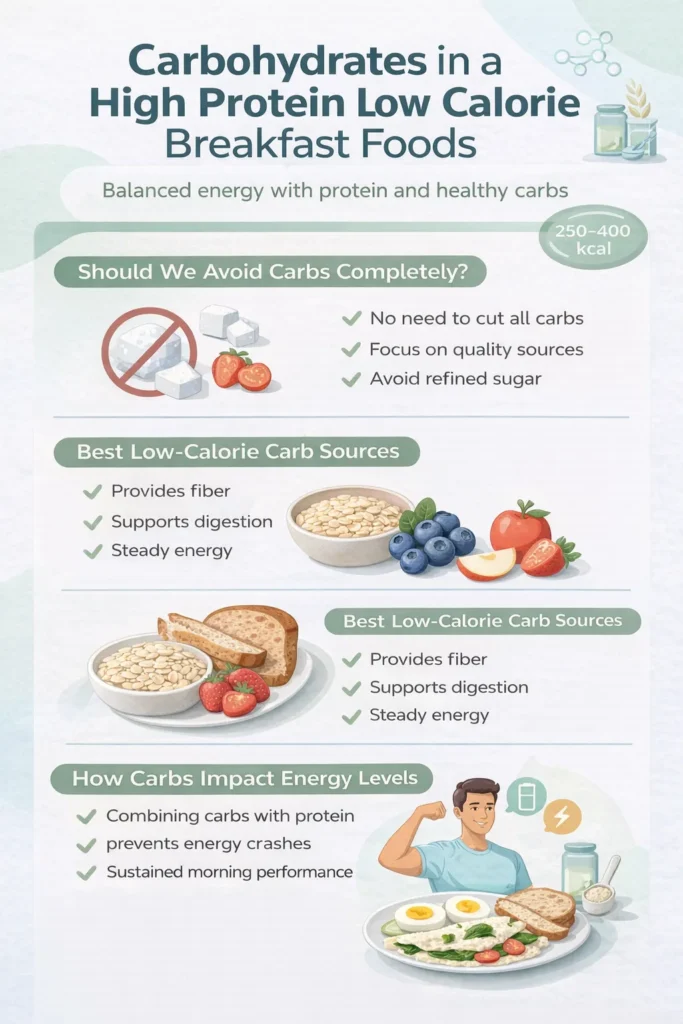
Carbohydrates provide energy and should not be fully removed. Small portions of whole grains and fruits work best.
Should We Avoid Carbs Completely?
No, avoiding carbs completely is not necessary. Choose quality carbs instead of refined sugar.
What Are the Best Low-Calorie Carb Sources?
Oats, berries, apples, and whole-grain bread are good options. They provide fiber and steady energy.
How Do Carbs Impact Energy Levels?
Carbs give quick energy. When combined with protein, they prevent sudden energy crashes.
What Mistakes Should We Avoid When Preparing a High-Protein, Low-Calorie Breakfast?
Common mistakes include adding hidden sugars, ignoring portion sizes, and using too much oil.
Are Hidden Sugars Increasing Calories?
Yes, flavoured yoghurt and sauces often contain hidden sugars. Always check labels.
Are Portion Sizes Being Overlooked?
Yes, large portions can increase calories even if the food is healthy. Measure servings carefully.
Are We Ignoring Healthy Fats?
Healthy fats are important, but should be used in small amounts to control calories.
Can a High-Protein, Low-Calorie Breakfast Support Muscle Growth?
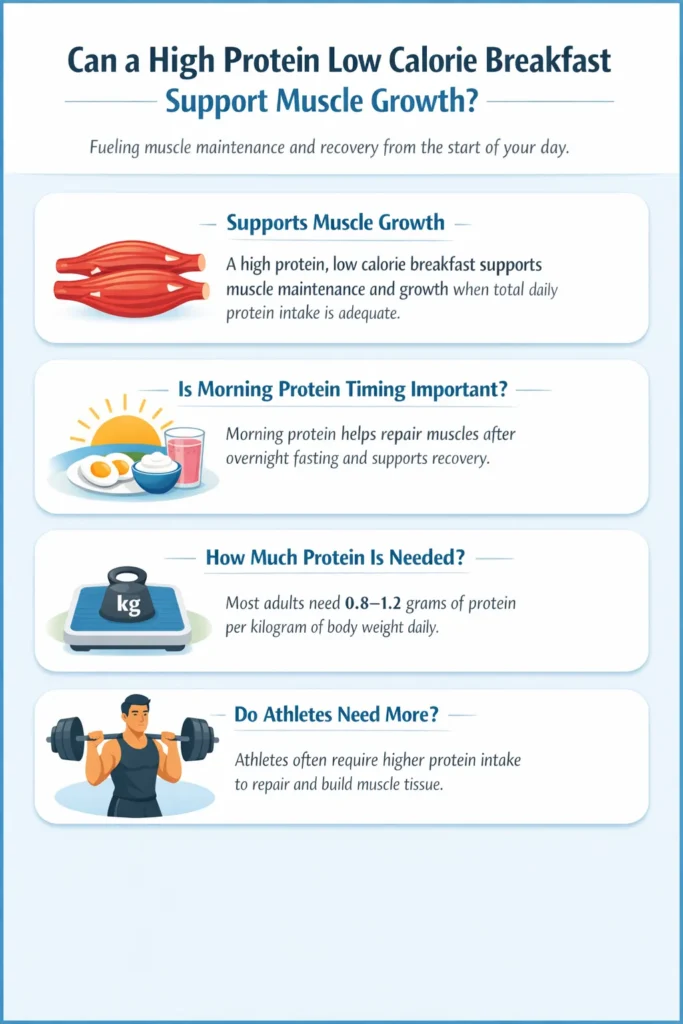
Yes, it supports muscle maintenance and growth when total daily protein intake is adequate.
Is Morning Protein Timing Important?
Morning protein helps repair muscles after overnight fasting and supports recovery.
How Much Protein Is Needed for Muscle Maintenance?
Most adults need 0.8–1.2 grams of protein per kilogram of body weight daily.
Should Athletes Consume More Protein?
Yes, athletes often require higher protein intake to repair and build muscles.
What is the best high-protein, low-calorie breakfast for Busy Mornings?
The best breakfast for busy mornings is quick, simple, and high in protein, such as boiled eggs, yoghurt, or protein shakes.
What Are 5-Minute High-Protein Options?
Boiled eggs, Greek yoghurt, protein shakes, and cottage cheese are fast and practical.
Are Grab-and-Go Breakfasts Effective?
Yes, if prepared properly with enough protein and low sugar, they are very effective.
Can Protein Shakes Save Time Without Adding Calories?
Yes, using low-calorie protein powder and unsweetened liquids keeps shakes quick and healthy.
How Can We Create a Sustainable High-Protein, Low-Calorie Breakfast Routine?
Building a routine requires planning, simple recipes, and consistent habits. Keep meals easy and repeat what works.
How Do We Maintain Consistency?
Prepare ingredients in advance and follow a simple weekly plan to stay consistent.
Should We Track Macros Daily?
Tracking macros helps beginners understand portions and protein needs.
How Do We Keep Breakfast Varied and Interesting?
Rotate protein sources, change fruits, and try new recipes to avoid boredom and stay motivated.
FAQ’S:
Is a High-Protein, Low-Calorie Breakfast Good for Weight Loss?
Yes, it is very helpful for weight loss. A high-protein, low-calorie breakfast keeps you fuller longer and reduces overeating. It also helps protect muscle while your body burns fat. This makes fat loss safer and more sustainable.
Can a High-Protein, Low-Calorie Breakfast Boost Energy Levels?
Yes, it can boost energy levels. Protein supports steady blood sugar levels, preventing sudden energy crashes. When you combine protein with small healthy carbs, you feel active, focused, and mentally sharp throughout the morning.
Is It Safe to Eat a High-Protein, Low-Calorie Breakfast Every Day?
Yes, it is safe for most healthy people when balanced properly. Include a variety of foods, such as eggs, yoghurt, plant proteins, and healthy fats. Balanced meals support long-term health and prevent nutrient deficiencies.
Should We Completely Avoid Carbohydrates at Breakfast?
No, completely avoiding carbohydrates is not necessary. Carbs provide your body and brain with important energy. Choose whole grains or fruits in small portions instead of refined sugar for better results.
Can We Skip Breakfast and Still Get the Same Benefits?
No, skipping breakfast may increase hunger later in the day. Many people overeat at lunch or snack more when they skip meals. A balanced, high-protein, low-calorie breakfast helps control appetite and supports healthy habits.
Conclusion:
A high-protein, low-calorie breakfast is a simple but powerful habit for better health. It supports weight control, protects muscle, and keeps your energy steady throughout the morning. By choosing balanced foods, controlling portions, and avoiding hidden sugars, you build a long-term routine. Small, smart choices each morning can create lasting results for your body and mind.