
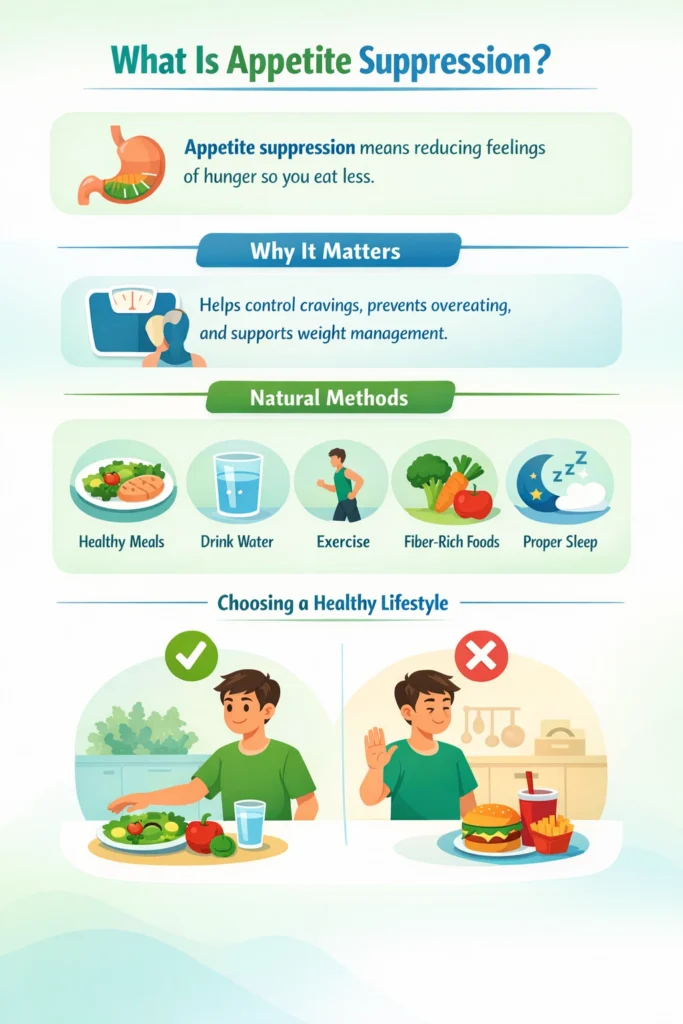
What Is Appetite Suppression?
Appetite suppression means reducing your feelings of hunger, so you eat less. It helps control cravings and overeating. Some people use natural habits, such as healthy eating, drinking water, and exercise, to safely manage appetite and improve weight control.
In this article, you will learn safe and effective ways to manage your hunger. Appetite suppression becomes a tool for better nutrition, improved well-being, and long-term healthy lifestyle changes.
Why Do People Want to Suppress Their Appetite?
Many people want appetite suppression to lose weight, stop emotional eating, or control unhealthy cravings. When hunger is balanced, it becomes easier to eat proper portions and avoid junk food. It supports long-term healthy weight management.
Is It Safe to Suppress Appetite?
Natural appetite-suppressing methods such as protein, fibre, sleep, and exercise are usually safe. But strong pills or medicines may cause side effects. Healthy lifestyle changes are the safest way. Always consult a doctor before using supplements.
Natural Ways to Suppress Appetite
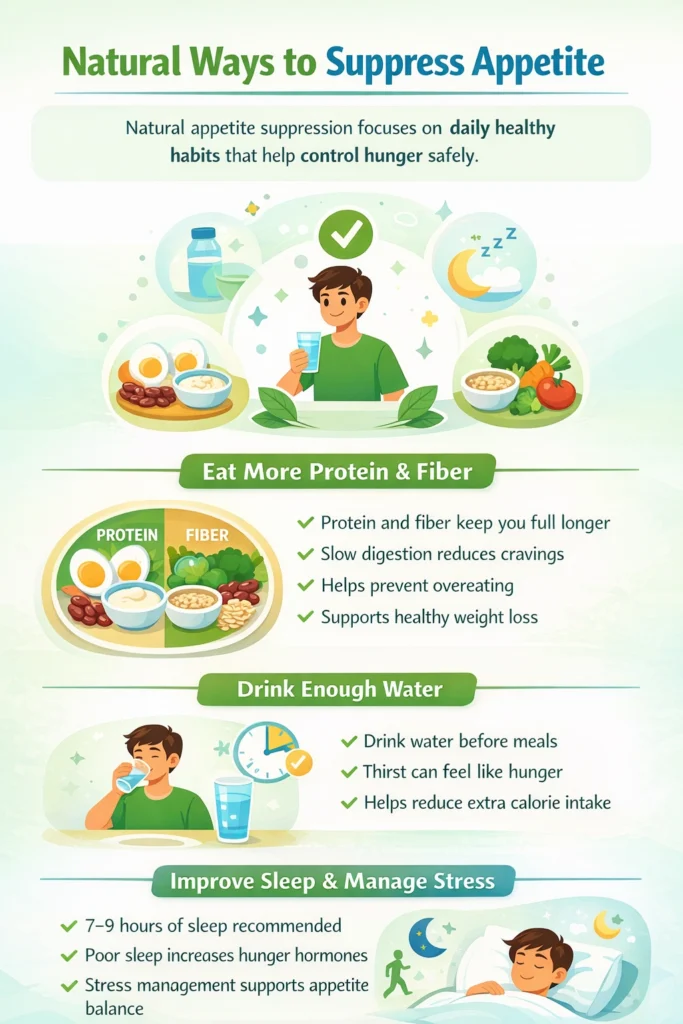
Natural appetite suppression focuses on daily healthy habits. Simple lifestyle changes help control hunger without harming your body.
Eat More Protein and Fibre
Protein and fibre keep you full longer. Eggs, beans, yoghurt, vegetables, and oats slow digestion and reduce cravings. Adding these foods to meals helps prevent overeating and supports healthy weight loss.
Drink Enough Water
Drinking water before meals may reduce hunger. Sometimes thirst feels like hunger. A glass of water 20–30 minutes before eating can help you feel satisfied and avoid extra calories.
Improve Sleep and Manage Stress
Poor sleep and high stress increase hunger hormones. Getting 7–9 hours of sleep and managing stress through walking or relaxation helps naturally balance appetite.
Foods That Help Reduce Hunger
Foods rich in protein, fibre, and healthy fats reduce hunger. Examples include eggs, nuts, fruits, vegetables, whole grains, and Greek yoghurt. These foods digest slowly, stabilise blood sugar, and prevent sudden cravings.
How Protein Helps Control Appetite
Protein reduces hunger by lowering the hunger hormone and increasing fullness hormones. It keeps you satisfied for hours. Including protein in every meal helps control appetite and supports muscle health during weight loss.
Does Drinking Water Reduce Appetite?
Yes, water can help reduce appetite. Drinking water before meals may make you feel full sooner. It also improves digestion and prevents confusing thirst with hunger, which often leads to unnecessary snacking.
Hormones That Control Hunger (Leptin & Ghrelin)
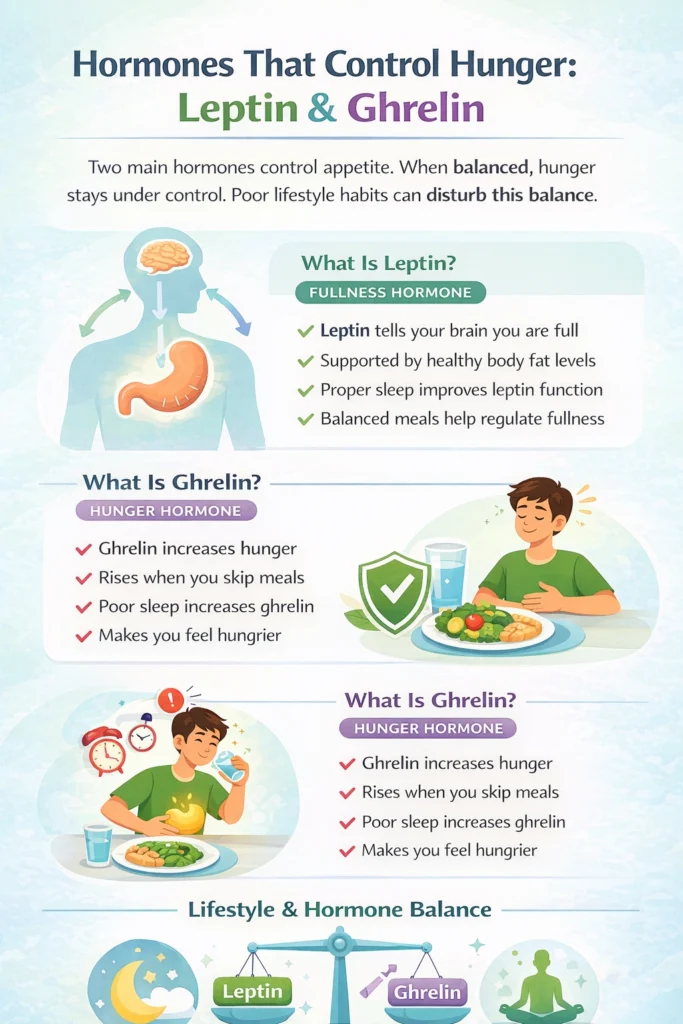
Two main hormones control appetite. When they are balanced, hunger stays under control. Poor lifestyle habits disturb these hormones.
What Is Leptin?
Leptin is the hormone that signals to your brain that you are full. Healthy body fat levels, proper sleep, and balanced meals support leptin function.
What Is Ghrelin?
Ghrelin is the hunger hormone. It increases when you skip meals or sleep poorly, making you feel hungrier.
How Lifestyle Affects These Hormones
Sleep, stress, diet quality, and exercise directly affect leptin and ghrelin. Healthy habits keep these hormones balanced and reduce overeating.
Role of Exercise in Appetite Control
Regular exercise helps balance hunger hormones and reduce stress eating. Moderate workouts like walking, cycling, or strength training support metabolism and improve appetite control without extreme dieting.
Are Appetite Suppressant Pills Safe?
Some appetite suppressant pills may work in the short term, but they can cause side effects like a fast heartbeat, sleep problems, or mood changes. They should only be used under medical supervision, not as a quick solution.
Possible Health Risks
Risks include high blood pressure, anxiety, digestive issues, and dependency. Long-term misuse may harm overall health.
Who Should Avoid Them?
Pregnant women, teenagers, and people with heart or mental health problems should avoid appetite suppressant pills.
When to Talk to a Doctor
Consult a doctor if you plan to use appetite suppressants or experience unusual hunger changes or rapid weight loss.
Side Effects of Appetite Suppressants
Common side effects include dry mouth, dizziness, headache, nausea, and sleep problems. Some people may experience mood swings or increased heart rate. Natural appetite suppression methods are safer for long-term use.
Appetite Suppression for Weight Loss – What Works Best?
The best appetite suppression for weight loss is natural and sustainable. Focus on balanced meals, protein, fibre, water, sleep, stress control, and regular exercise.
Best Natural Methods
High-protein meals, fibre-rich foods, hydration, and daily movement are proven methods for appetite control.
Long-Term Healthy Strategy
Avoid extreme dieting. Build consistent habits that you can follow for months and years.
Common Mistakes to Avoid
Skipping meals, using unsafe pills, and ignoring sleep can increase hunger and slow weight loss progress.
FAQ’S:
1. Can appetite suppression help with weight loss?
Yes, appetite suppression can help with weight loss if done naturally. Eating protein, fiber, drinking water, and sleeping well can reduce hunger. This makes it easier to control portions and avoid overeating.
2. Does drinking water reduce appetite?
Yes, drinking water before meals may help you feel full. Sometimes your body feels hungry when it is actually thirsty. Water can prevent extra snacking and support healthy digestion.
3. Can high-protein foods control hunger?
Yes, protein helps you feel full longer. Foods like eggs, yoghurt, beans, and chicken slow digestion and reduce cravings. Adding protein to each meal supports healthy appetite control.
4. Are appetite suppressant pills safe for everyone?
No, appetite suppressant pills are not safe for everyone. They can cause side effects such as a fast heartbeat or sleep problems. Always talk to a doctor before using them.
5. Is skipping meals a good way to suppress appetite?
No, skipping meals can increase hunger later. It may slow your metabolism and cause overeating. Eating balanced meals at regular times is a healthier way to control appetite.
Conclusion:
Appetite suppression works best through natural, safe, and sustainable methods. Eating protein- and fibre-rich foods, drinking water, sleeping well, managing stress, and exercising regularly help control hunger, balance hormones, and prevent overeating. Avoid extreme dieting and unsafe pills. Consistent healthy habits support long-term weight management, improved well-being, and smarter food choices for a balanced lifestyle.
.
.