
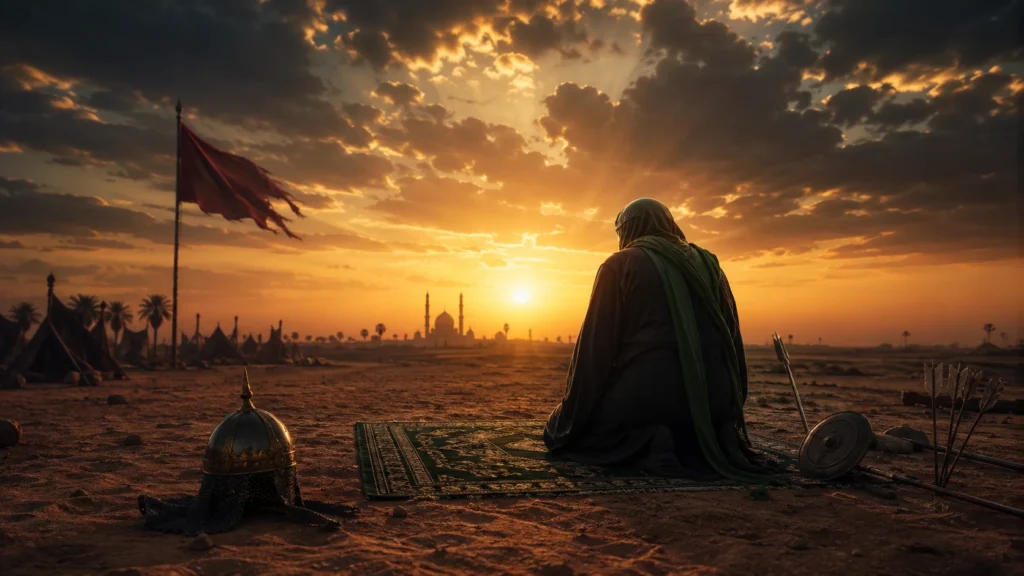
Prayer is more than a ritual — it is the quiet bond that connects the heart to its Creator. This poetry brings that truth to life through Imam Hussain’s (as) final prostration at Karbala, where even in the face of cruelty, he never let go of his sajda.
If you have ever drifted away from prayer, or wanted to feel the weight of Karbala’s sacrifice, these verses are written for you. Each line carries a piece of Hussain’s (as) courage and the light that prayer brings — read slowly, because this is more than poetry, it’s a message meant to reach the heart.
Why do you turn away from prayer
Have you forgotten Hussain’s last prostration
Prayer is not just a form of worship
It is the lamp of servitude, it is the light of the heart
It is the bond that connects us to the Creator
It is the light that shatters the darkness
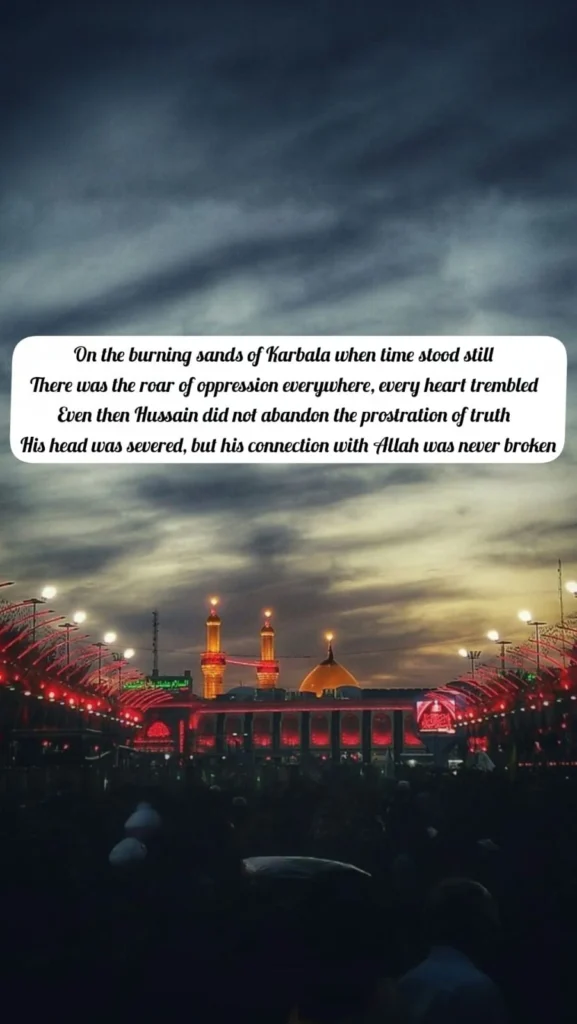
On the burning sands of Karbala when time stood still
There was the roar of oppression everywhere, every heart trembled
Even then Hussain did not abandon the prostration of truth
His head was severed, but his connection with Allah was never broken
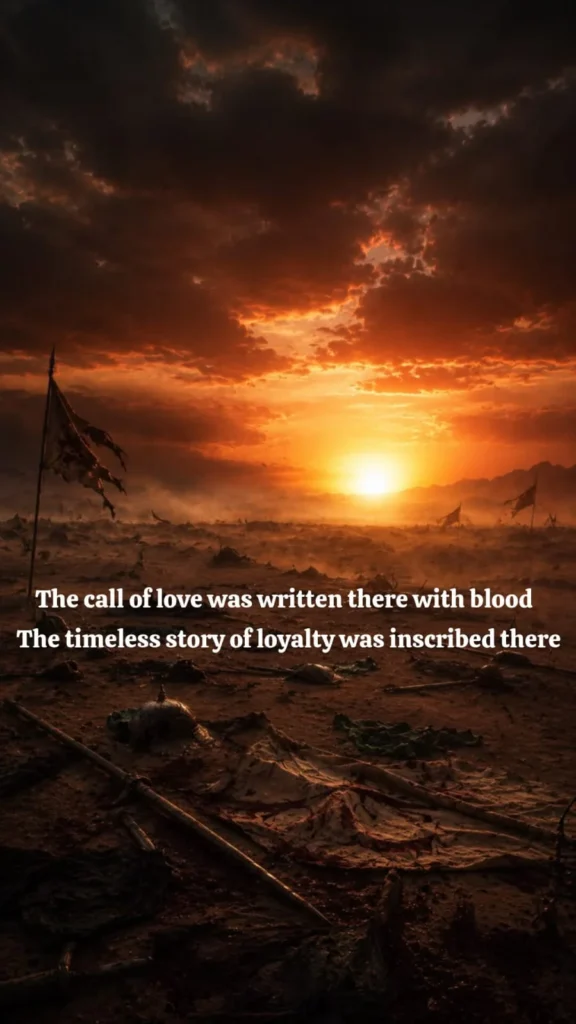
The call of love was written there with blood
The timeless story of loyalty was inscribed there
Prayer taught us what faith truly is
Prostration taught us what sacrifice truly is
O heart, if you get lost in heedlessness of prayer
Then you have extinguished the lamp of your own soul
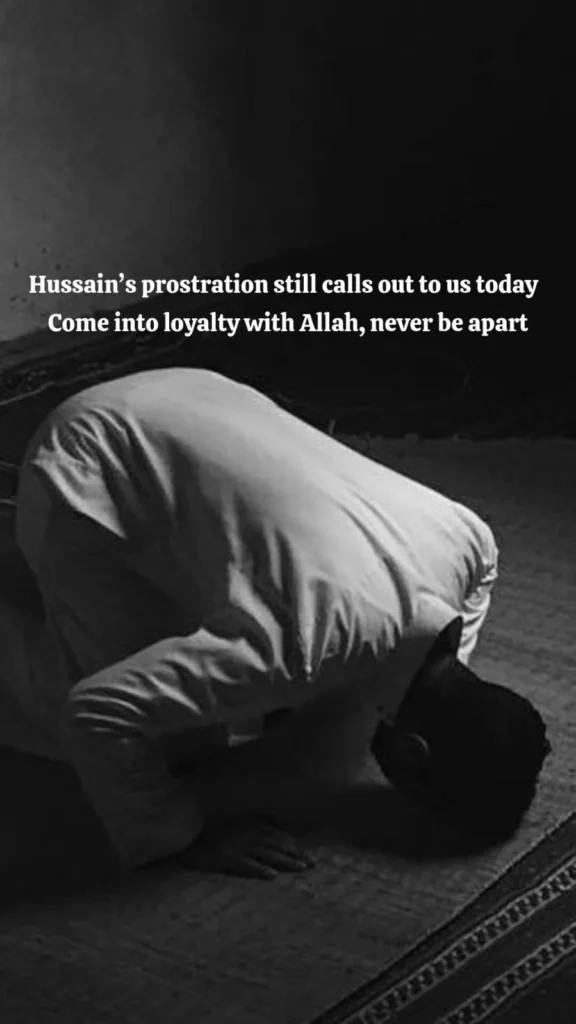
Hussain’s prostration still calls out to us today
Come into loyalty with Allah, never be apart
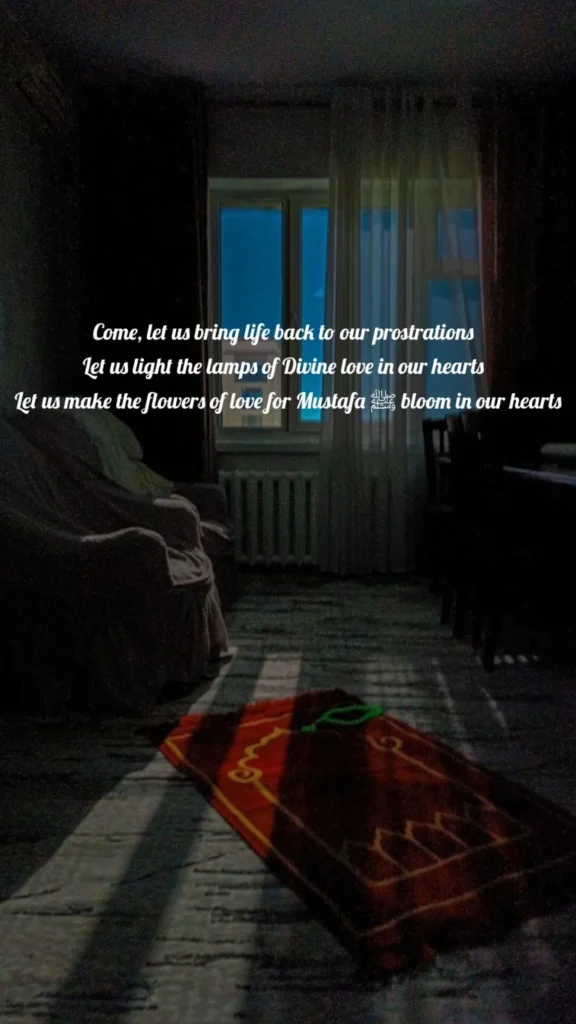
Come, let us bring life back to our prostrations
Let us light the lamps of Divine love in our hearts
Let us make the flowers of love for Mustafa ﷺ bloom in our hearts
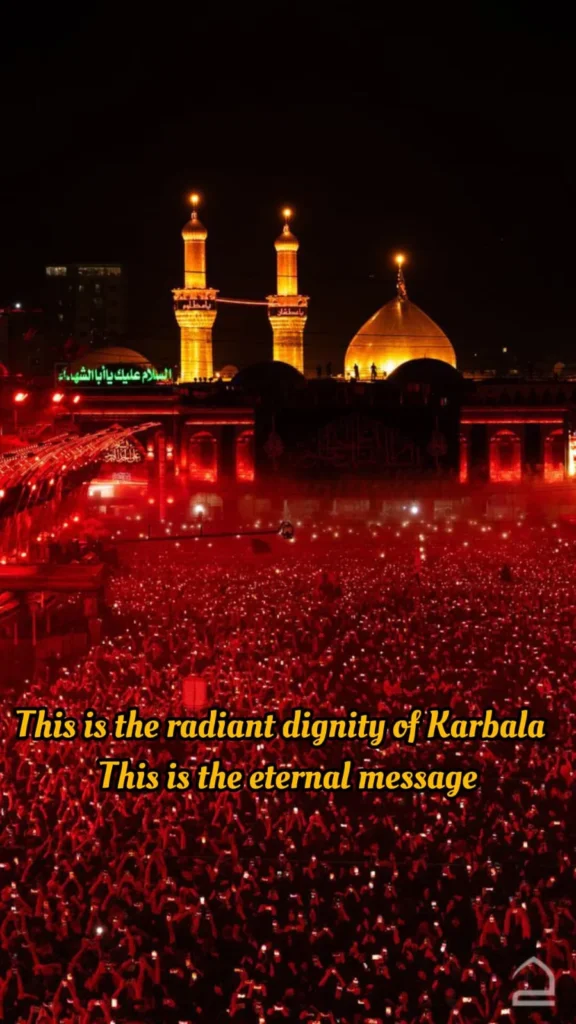
This is the radiant dignity of Karbala
This is the eternal message
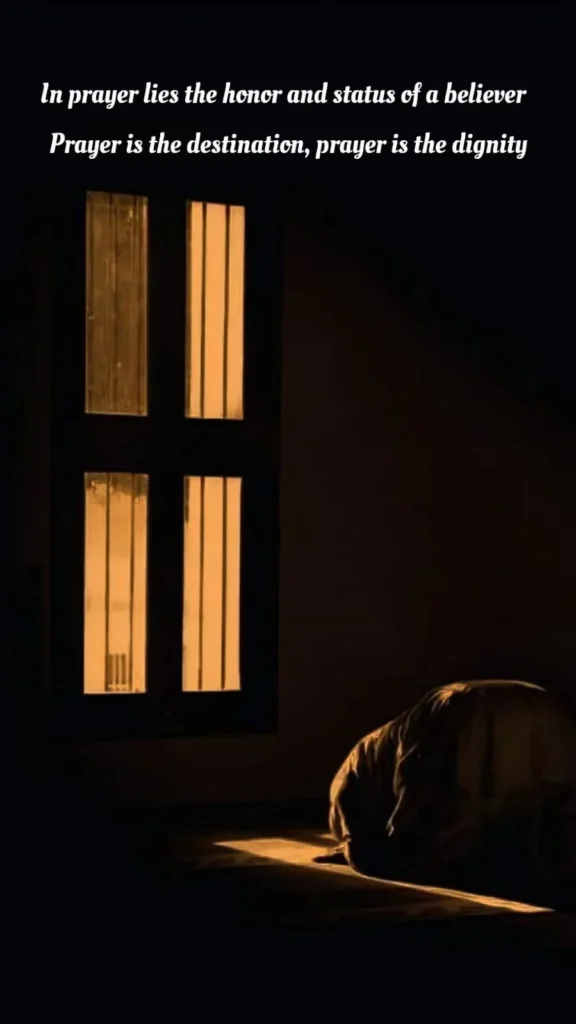
In prayer lies the honor and status of a believer
Prayer is the destination, prayer is the dignity
May Allah grant us the ability to value prayer
May we learn the lesson of steadfastness from Hussain
Ameen Summa Ameen
FAQ’S:
Q1. Why does the poem say prayer is not just a form of worship, but the light of the heart?
Because prayer is more than a physical act — it connects the heart to Allah and brings inner peace and purpose, which is why it’s called “the light of the heart.”
Q2. Did Imam Hussain (as) really not abandon prayer even at the end at Karbala?
Yes, according to tradition, he held onto his prostration of truth even in the most brutal circumstances — that’s why his sajda is seen as the greatest example of what prayer truly means.
Q3. According to the poem, does neglecting prayer harm the soul?
Yes, the poem describes heedlessness toward prayer as “extinguishing the lamp of your own soul” — meaning the heart slowly drifts away from Allah.
Q4. What does the poem mean by "the radiant dignity of Karbala" and "the eternal message"?
It means Karbala isn’t just a historical event — its lessons of loyalty, sacrifice, and valuing prayer remain a living message for all time.
Q5. Can anyone light the "lamps of Divine love" in their heart, as the poem invites?
Yes, the poem’s call is exactly that — anyone can revive their prayers and renew their love for Allah and the Prophet ﷺ, no matter where they’re starting from.
before we goo
Hussain’s (as) prostration at Karbala reminds us that prayer is never bound by circumstance. Just as caring for the body and mind matters in daily life’
our Peak Health and Wellness Center guide (https://versesoul.com/peak-health-and-wellness-center/) offers gentle support for that balance. If new experiences and patience-filled journeys speak to you,
take a look at our Bahamas travel guide (https://versesoul.com/best-time-to-go-to-the-bahamas/),
and for the original Urdu version of this same poem, visit Namaz Aur Imam Hussain Poetry (https://versesoul.com/namaz-aur-imam-hussain-poetry/).