
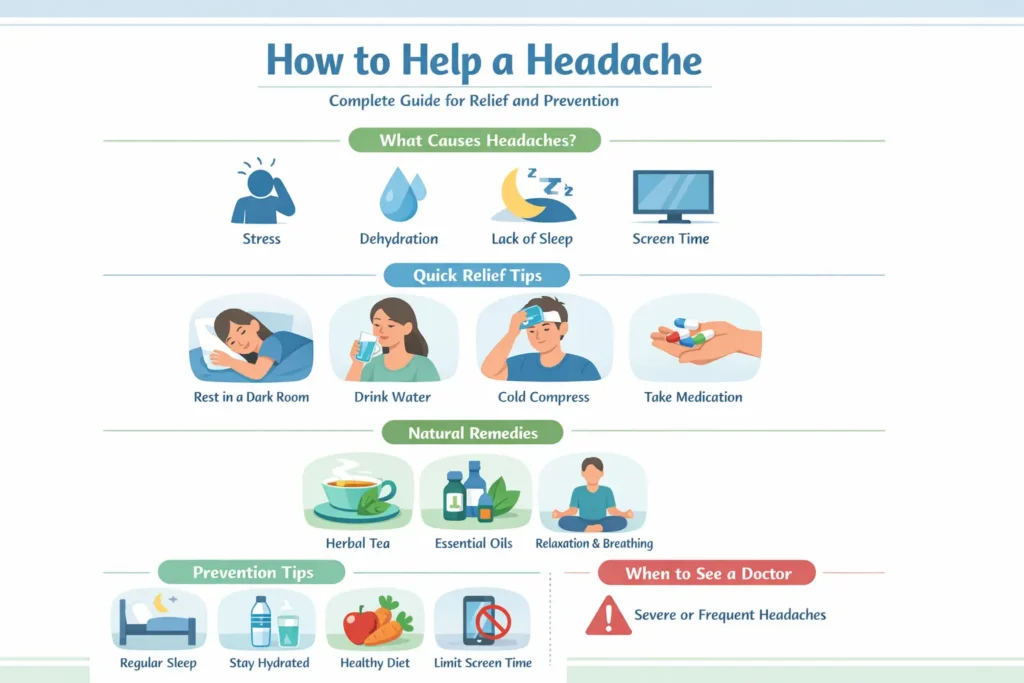
Headaches are common and can range from mild discomfort to severe pain, affecting work, school, or sleep. Effective remedies provide fast relief and help prevent future episodes. This guide covers causes, treatments, and prevention strategies.
In this guide, you will learn clear and practical tips that really work. These ideas are easy to follow and can help you feel better fast without confusion or stress.
1. Understanding Headaches
Headaches are pain or pressure in the head or neck from muscles, nerves, or blood vessels. They may be occasional or chronic. Knowing which headache type—tension, migraine, or cluster—guides treatment or prevention.
H3: Types of Headaches
Tension headaches usually cause mild pressure and are caused by stress or poor posture. Migraines are severe, throbbing headaches that are sometimes accompanied by nausea or light sensitivity. Cluster headaches are intense and sudden, often on one side of the head.
H3: How Headaches Affect Daily Life
Headaches reduce focus, cause fatigue, and make activities challenging. Early relief prevents pain from worsening and reduces reliance on medication.
2. Common Causes of Headaches
Headaches can occur due to lifestyle, environmental factors, or health conditions. Identifying the causes helps in prevention.
H3: Lifestyle and Health Factors
Dehydration, skipping meals, long screen time, poor sleep, and poor posture are common causes. Sinus issues, high blood pressure, and certain medications may also trigger headaches.
H3: Environmental Triggers
Bright lights, loud noises, strong smells, and weather changes can also trigger headaches.
3. Immediate Relief Techniques
Quick relief helps you continue your day comfortably. Resting in a dark, quiet room, using cold or warm compresses, a gentle neck and head massage, and deep breathing exercises can quickly ease pain.
H3: Cold or Warm Compress
Cold packs reduce inflammation and numb pain, while warm compresses relax tight muscles. Apply for 10–15 minutes for relief.
H3: Gentle Massage
Massage temples and neck to boost blood flow and relieve tension, especially with aromatherapy.
H3: Breathing Exercises
Slow, deep breathing soothes the body and reduces headache pain, especially if stress-related.
4. Over-the-Counter Medications
OTC medicines like Paracetamol or Ibuprofen work for mild to moderate headaches. Follow dosing instructions and don’t overuse to avoid side effects.
5. Natural Remedies for Headaches
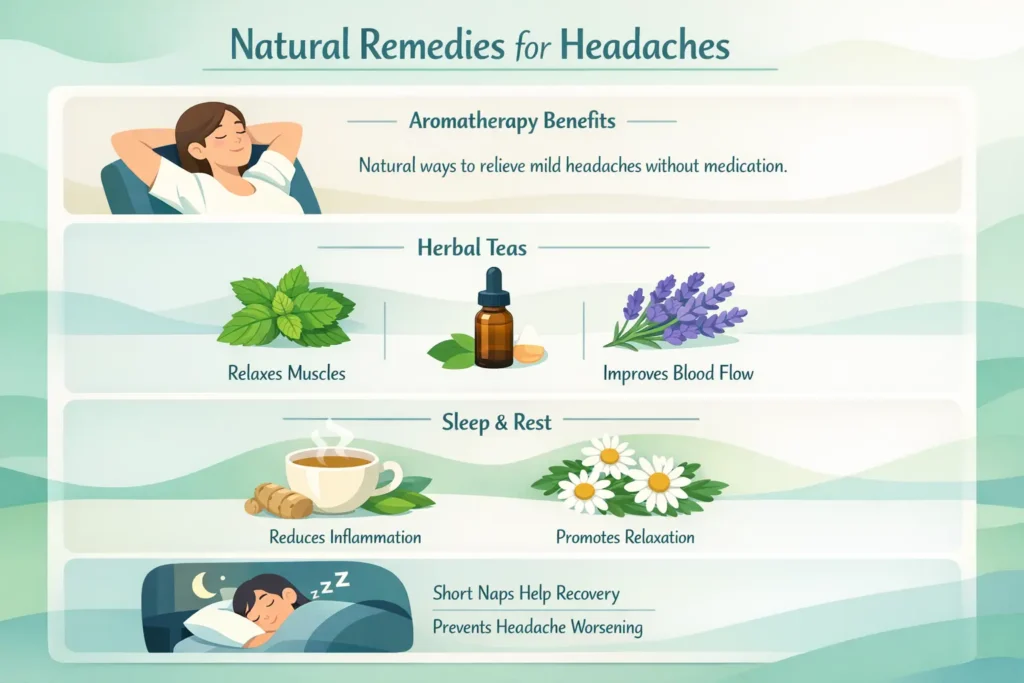
Natural options help with mild pain or when avoiding medications. Peppermint or lavender oil, herbal teas, stretching, and rest can reduce headaches.
H3: Aromatherapy Benefits
Peppermint and lavender oil relax muscles and support blood flow. Used properly, they are safe and enhance massage.
H3: Herbal Teas
Ginger tea lowers inflammation, and chamomile promotes relaxation. Drink slowly for best results.
H3: Sleep and Rest
Short naps in a quiet, dark room help the body recover and prevent worsening headaches.
6. Hydration and Diet Tips
Many headaches are caused by dehydration or poor nutrition. Drinking enough water daily, eating regular meals, and avoiding excess caffeine, sugar, and processed foods help prevent headaches.
“Drinking warm water daily is one of the easiest habits you can build — read Benefits of Drinking Warm Water.“
7. Stress Management for Headache Prevention
Stress is a major trigger. Practice relaxation, meditation, yoga, hobbies, or light exercise to reduce tension headaches and prevent migraines.
Mindfulness and Relaxation
Focus on breathing and calm thoughts to lower stress and ease headache pain.
Exercise Benefits
Short walks, stretching, or yoga improve blood circulation and reduce headache frequency.
“When stress runs deep, healing words can help — When the Soul Bleeds — English Healing Poetry.“
8. Posture and Ergonomics
Poor posture strains the neck and shoulders, causing headaches. Sit straight, adjust screens, and stretch to reduce tension.
H3: Desk and Sleeping Posture
Use ergonomic chairs and pillows to avoid strain. Don’t slouch and sleep in good positions to prevent headaches.
9. When to Seek Medical Help
See a doctor if headaches are severe, sudden, or frequent. Headaches with vision changes, dizziness, weakness, or vomiting need urgent care. Ongoing pain despite remedies may indicate underlying issues.
10. Headache Triggers and How to Avoid Them
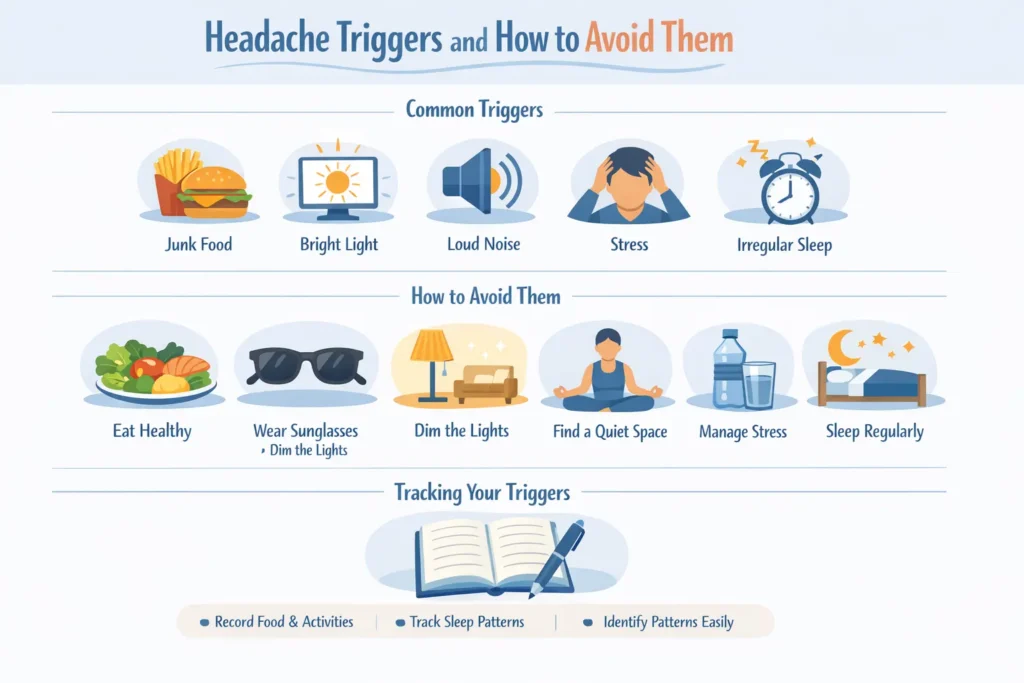
Triggers include some foods, bright lights, noise, stress, dehydration, and irregular sleep. Identifying and adjusting for these can prevent headaches.
H3: Tracking Your Triggers
Keep a diary of foods, activities, and sleep. Recording patterns helps identify and prevent triggers.
11. Migraine-Specific Strategies
Migraines require careful management. Rest in a dark, quiet room, use cold compresses, avoid known triggers, and maintain a regular sleep and meal schedule. Preventive medications may be prescribed for frequent migraines.
H3: Preventive Measures
Track migraines, maintain hydration and regular meals, avoid triggers, and use prescribed medications only.
Long-Term Headache Management
Prevent headaches with consistent healthy habits: stay hydrated, eat balanced meals, exercise, manage stress, maintain posture, and take screen breaks. Regular check-ups detect issues early.
Healthy Habits for Prevention
Limit screen time, practice relaxation, and maintain a consistent sleep schedule. Combining these habits reduces both the frequency and the severity of headaches.
FAQs About Headache Relief
1. Can drinking water help with a headache? – Yes
Yes, dehydration often triggers headaches. Drinking water replenishes fluids and helps relieve or prevent headaches.
2. Does resting in a dark room help migraines? – Yes
Yes, resting in a quiet, dark room eases migraine pain. Adding a cold compress may help more.
3. Can lifestyle changes prevent headaches? – Yes
Yes, regular sleep, hydration, exercise, and stress management can naturally reduce the frequency and severity of headaches.
4. Are all headaches dangerous? – No
No, most headaches are caused by stress, dehydration, or poor posture. Seek a doctor for severe or sudden pain.
5. Should I take medicines for every headache? – No
No, mild headaches often improve with rest, hydration, or natural remedies, without resorting to unnecessary medications.
Conclusion:
Headaches can be managed with simple habits and quick care. By understanding causes and using the right remedies, you can find fast relief and prevent future pain. Small changes like staying hydrated, resting, and managing stress make a big difference. Follow these simple tips daily to stay comfortable, focused, and free of frequent headaches without relying too much on medication.
“Sometimes a change of scenery is the best medicine — explore Best Places to Visit in the USA.“