
Sad poetry has always been a powerful way to express emotions that words often fail to convey in everyday conversations. It captures the quiet pain of heartbreak, the silence of loss, and the unspoken grief that lingers deep within the soul. People turn to sad poetry when they feel emotionally overwhelmed, misunderstood, or alone, because poetry has the unique ability to mirror their inner feelings and offer emotional relief.
This article explores the depth and meaning behind sad poetry about love, loss, and silent pain, while also presenting a heartfelt poem that reflects emotional darkness, fading hope, and longing. Along with the original Urdu poem, you will also find its English translation and Roman Urdu version, making it accessible to a wider audience without altering its original essence.
The Emotional Power of Sad Poetry
Sad poetry is not just about sorrow; it is about truth. It speaks of broken hearts, lost love, emotional distance, and silent suffering. Unlike loud expressions of grief, sad poetry often communicates pain in a soft, subtle, and deeply touching manner. This is why people from different cultures and backgrounds connect so deeply with it.
Poetry about sadness allows readers to:
- Feel understood during emotional pain
- Process heartbreak and loss
- Find comfort in shared emotions
- Reflect on personal experiences
- Heal slowly through expression
When love fades or expectations collapse, emotions often remain trapped inside. Sad poetry becomes a safe space where these feelings can breathe.
Love, Loss, and Silent Pain in Poetry
Love is beautiful, but its absence can be devastating. Loss does not always mean separation through death; sometimes it is the loss of presence, attention, or emotional connection. Silent pain, on the other hand, is the hardest form of suffering because it is invisible to others.
This poem beautifully portrays:
- The extinguishing of hope
- Emotional darkness after love fades
- Loneliness caused by absence
- Tears hidden behind tired eyes
- The quiet end of once-beautiful emotions
It reflects how love once filled life with color and light, and how its loss leaves behind uncertainty and sadness.
Urdu Version
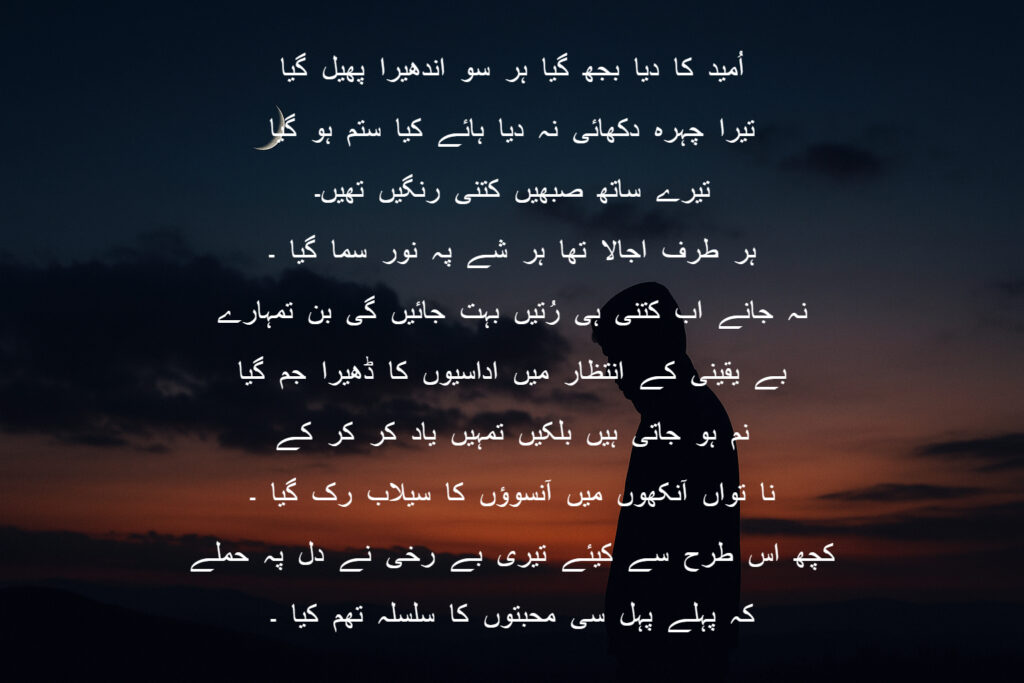
اُمید کا دیا بجھ گیا ہر سو اندھیرا پھیل گیا
تیرا چہرہ دکھائی نہ دیا ہائے کیا ستم ہو گیا
تیرے ساتھ صبھیں کتنی رنگیں تھیں۔
ہر طرف اجالا تھا ہر شے پہ نور سما گیا ۔
نہ جانے اب کتنی ہی رُتیں بہت جائیں گی بن تمہارے
بے یقینی کے انتظار میں اداسیوں کا ڈھیرا جم گیا
نم ہو جاتی ہیں بلکیں تمہیں یاد کر کر کے
نا تواں آنکھوں میں آنسوؤں کا سیلاب رک گیا ۔
کچھ اس طرح سے کیئے تیری بے رخی نے دل پہ حملے
کہ پہلے پہل سی محبتوں کا سلسلہ تھم کیا ۔
Roman Urdu Version
Umeed ka diya bujh gaya har soo andhera phail gaya
Tera chehra dikhai na diya haaye kya sitam ho gaya
Tere saath subhain kitni rangeen theen
Har taraf ujala tha har shay pe noor sama gaya
Na jaane ab kitni hi rutain beet jaengi bin tumhare
Be-yaqeeni ke intezar mein udaasiyon ka dhera jam gaya
Nam ho jaati hain palkain tumhein yaad kar kar ke
Na-tawan aankhon mein aansuon ka sailaab ruk gaya
Kuch is tarah se kiye teri be-rukhi ne dil pe hamlay
Ke pehle pehl si mohabbaton ka silsila tham gaya
English Version
The lamp of hope went out, darkness spread everywhere
Your face could not be seen, what a cruel fate this became
With you, even mornings were full of colors
Light surrounded everything, and radiance filled every sight
Who knows how many seasons will pass without you
In uncertain waiting, a heap of sadness has settled
My eyelashes grow moist remembering you again and again
In these tired eyes, a flood of tears has finally paused
Your cold indifference attacked my heart in such a way
That the flow of first love slowly came to an end
Meaning and Interpretation of the Poem
This sad poetry reflects emotional devastation caused by emotional distance and absence. The extinguished lamp of hope symbolizes lost expectations and shattered dreams. The contrast between colorful mornings and present darkness highlights how love once illuminated life.
The repeated mention of waiting, uncertainty, and seasons passing suggests emotional stagnation, where time moves forward but the heart remains stuck. The imagery of tired eyes and stopped tears reveals emotional exhaustion — a stage where pain becomes silent and internal.
The final lines emphasize how emotional neglect can be as damaging as betrayal. Cold behavior slowly weakens love until it fades away completely.
Why Readers Connect With Sad Poetry
People search for sad poetry because:
- They are experiencing heartbreak
- They feel emotionally unheard
- They want words that reflect their pain
- They seek emotional validation
- They find peace in poetic expression
Sad poetry reassures readers that they are not alone in their suffering. It transforms personal grief into shared human emotion.
The Healing Role of Sad Poetry
Although sad poetry expresses pain, it also plays a healing role. Reading or writing such poetry allows emotions to surface instead of remaining suppressed. This emotional release helps readers reflect, accept, and slowly heal.
Sad poetry:
- Encourages emotional awareness
- Helps process unresolved feelings
- Provides comfort through relatability
- Promotes inner reflection
Conclusion
Sad Poetry About Love, Loss, and Silent Pain is more than just emotional writing; it is a mirror of the heart’s deepest wounds. This poem captures the journey from light to darkness, from hope to uncertainty, and from love to silent suffering. By presenting the original Urdu poetry along with Roman Urdu and English translations, this article ensures that the emotion remains pure while reaching a wider audience.
If you are someone who finds comfort in words, or if your heart carries unspoken pain, sad poetry can be a gentle companion in your healing journey.
More heartfelt reads: Terror of Loneliness and Dahshat-e-Tanhai Mein.
Poetry can hold your pain, but healing also asks for gentle action. Practicing self-love is often the quiet first step back to yourself. And when the heart needs distance from what once was, solo travel to safe cities in the US can offer the space to breathe and begin again.